Osman Chapter 170: Akhisar Campaign and Political Tensions
The Rise of a Vision Beyond Conquest
In the shifting and uncertain world of late medieval Anatolia, political authority was rarely stable and almost never uncontested. The once-dominant Byzantine Empire was gradually losing control over its frontier regions, while various Turkish beyliks, emerging from the decline of the Seljuk Sultanate, competed intensely for influence and survival. Within this complex environment, Osman Bey began to stand out—not merely as a tribal leader, but as a figure with a long-term vision of state-building.
His decision to move toward Akhisar was not simply a territorial ambition. It represented a calculated step toward establishing a structured and sustainable political order. Akhisar held strategic importance due to its location along key trade and military routes. Controlling it would weaken Byzantine defenses while also sending a clear signal to rival leaders such as Karesi Bey.
What distinguishes Osman Bey’s approach is not speed, but preparation. Rather than acting impulsively, he focused on strengthening internal organization, ensuring loyalty among his people, and building a system capable of sustaining expansion. This reflects a broader historical principle seen in early Ottoman development: successful expansion depended on internal stability as much as external strength.
At the same time, Osman Bey’s growing influence created concern among neighboring rulers. Karesi Bey, in particular, began to perceive Osman not just as a rival, but as a serious threat to the regional balance of power. Even before direct confrontation, a silent political tension had already begun to shape the region.
Karesi Bey and the Limits of Control
In contrast to Osman Bey’s structured approach, Karesi Bey responded to rising pressure by asserting stricter control over his territories. His declaration of martial law in Karadin reflects an attempt to maintain authority during uncertain times.
While such measures may appear decisive, they often indicate underlying instability. By restricting movement, increasing control, and limiting public expression, Karesi Bey aimed to prevent dissent. However, historical patterns suggest that governance based on fear rarely produces long-term stability.
Instead of building trust, such policies often create silent resistance. While outward order may be maintained, dissatisfaction tends to grow beneath the surface. This creates a fragile system, vulnerable to both internal unrest and external pressure.
In this context, Osman Bey’s rise becomes even more significant. His leadership, based on shared purpose and collective trust, offered a clear contrast to fear-based authority. This difference in governance styles played a critical role in shaping the broader political dynamics of the region.
Bala Hatun and the Preservation of Internal Unity
While external campaigns were being prepared, an equally important responsibility emerged within the Kayı community. Maintaining internal unity became essential, and this role was primarily carried by Bala Hatun.
In times of expansion, internal divisions can weaken even the strongest leadership. The growing tension between Gonca Hatun and Holofira represented such a risk. What began as a personal disagreement had the potential to evolve into a wider internal conflict.
Bala Hatun’s approach to this issue highlights a different dimension of leadership. Rather than imposing authority or escalating the situation, she focused on balance and understanding. By carefully managing relationships and addressing underlying tensions, she worked to preserve stability within the tribe.
However, this effort was challenged by the actions of Begüm Hatun, who sought to intensify the conflict for her own advantage. This dynamic reflects a recurring historical pattern: internal divisions are often exploited by individuals seeking influence.
The situation emphasizes that unity within leadership structures is not automatic—it must be actively maintained and protected.
Sofia’s Strategic Intervention
Beyond internal tensions, a significant external challenge emerged through Sofia’s calculated actions. Unlike traditional military confrontation, her strategy focused on psychological pressure.
The abduction of Fatma, along with Saruca and Yusuf, was not random. It was a deliberate move designed to create emotional instability and disrupt decision-making. By targeting individuals connected to Osman Bey, Sofia aimed to weaken the broader structure indirectly.
The impact of this event was immediate. News spread quickly, affecting morale and creating uncertainty within the community. Such actions demonstrate how conflict during this period was not limited to physical confrontation but also involved psychological and strategic elements.
Crisis Management and Leadership Response
The response to this crisis once again highlighted the importance of leadership beyond the battlefield. Bala Hatun played a central role in managing the situation.
Instead of reacting impulsively, she maintained a balanced approach, combining urgency with careful planning. This reflects a key leadership principle: in moments of uncertainty, controlled decision-making becomes more important than rapid reaction.
Her actions were not only aimed at resolving the immediate situation but also at maintaining confidence and stability within the community. This ability to manage both emotional and strategic challenges is a defining feature of effective leadership.
The Strategic Alliance of Sofia and Lucas
The collaboration between Sofia and Lucas introduced a more complex layer to the ongoing conflict. Lucas, known for his strategic mindset, complemented Sofia’s approach by focusing on tactical positioning and calculated pressure.
Their methods extended beyond direct confrontation. By using hostages and controlled scenarios, they aimed to influence decision-making rather than relying solely on force. This reflects a broader understanding of conflict, where psychological influence can be as impactful as military strength.
Osman Bey and the Challenge of Decision-Making
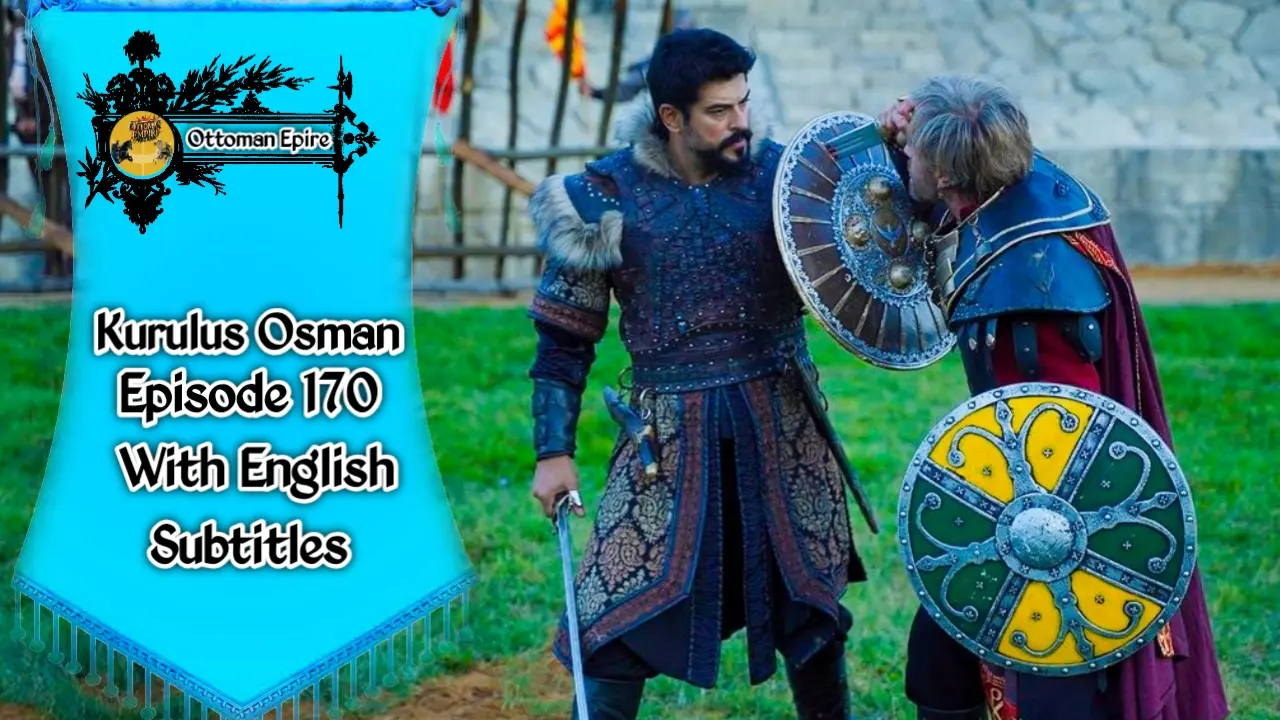
The eventual confrontation between Osman Bey and Lucas represents more than a simple clash. It highlights the difficulty of leadership under pressure.
At a moment where strategic advantage appeared possible, the presence of Fatma introduced a new variable. This created a situation where any decision carried significant consequences.
Such moments illustrate a critical aspect of leadership: the ability to navigate complex choices where emotional, political, and strategic factors intersect.
“Leadership is not defined by easy victories, but by decisions made under pressure and uncertainty.”
Key Developments Overview
| Section | Focus | Key Insight |
| Akhisar Campaign | Strategic Expansion | Targeting a key location for regional control |
| Internal Unity | Tribal Stability | Managing tensions within leadership |
| Political Tensions | External Pressure | Rising challenges from rival forces |
Symbolism of Hidden Threats
The presence of a masked figure controlling the situation introduces a symbolic dimension. It represents the idea that not all threats are visible or easily understood.
In a politically fragmented environment, alliances shift, and hidden actors often influence outcomes. This reinforces the importance of awareness and adaptability in leadership.
Understanding both visible and hidden dynamics becomes essential for maintaining control in such environments.
Key Takeaways
- Osman Bey’s movement toward Akhisar reflects long-term strategic planning rather than immediate expansion.
- Karesi Bey’s strict control highlights the limitations of authority based on fear.
- Bala Hatun’s role demonstrates the importance of internal stability during external campaigns.
- Sofia and Lucas represent strategic and psychological approaches to conflict.
- Leadership during crises requires balance between emotional control and strategic thinking.
Conclusion
The developments surrounding Osman Bey’s campaign toward Akhisar illustrate a broader transformation taking place in Anatolia. This was not merely a period of territorial competition, but a phase where different models of leadership, governance, and strategy were being tested.
Osman Bey’s approach, centered on preparation, unity, and long-term vision, contrasts sharply with the reactive and control-driven strategies of his rivals. At the same time, internal challenges and external pressures reveal that success depended on more than military strength alone.
Ultimately, this phase highlights how political authority is shaped through a combination of strategic planning, internal cohesion, and the ability to respond effectively to complex challenges.
Frequently Asked Questions (FAQ)
Why was Akhisar strategically important?
Akhisar provided control over key routes and acted as a gateway for further regional influence.
What does Karesi Bey’s governance approach indicate?
It reflects a reliance on strict control, which may ensure short-term stability but weakens long-term trust.
How did Bala Hatun contribute to stability?
She managed internal tensions and maintained unity within the community during external challenges.
What was the purpose of Sofia’s actions?
Her strategy aimed to create psychological pressure and disrupt decision-making.
How does this period reflect broader historical dynamics?
It highlights the interaction between internal unity, external threats, and leadership strategy during the early formation of political states.