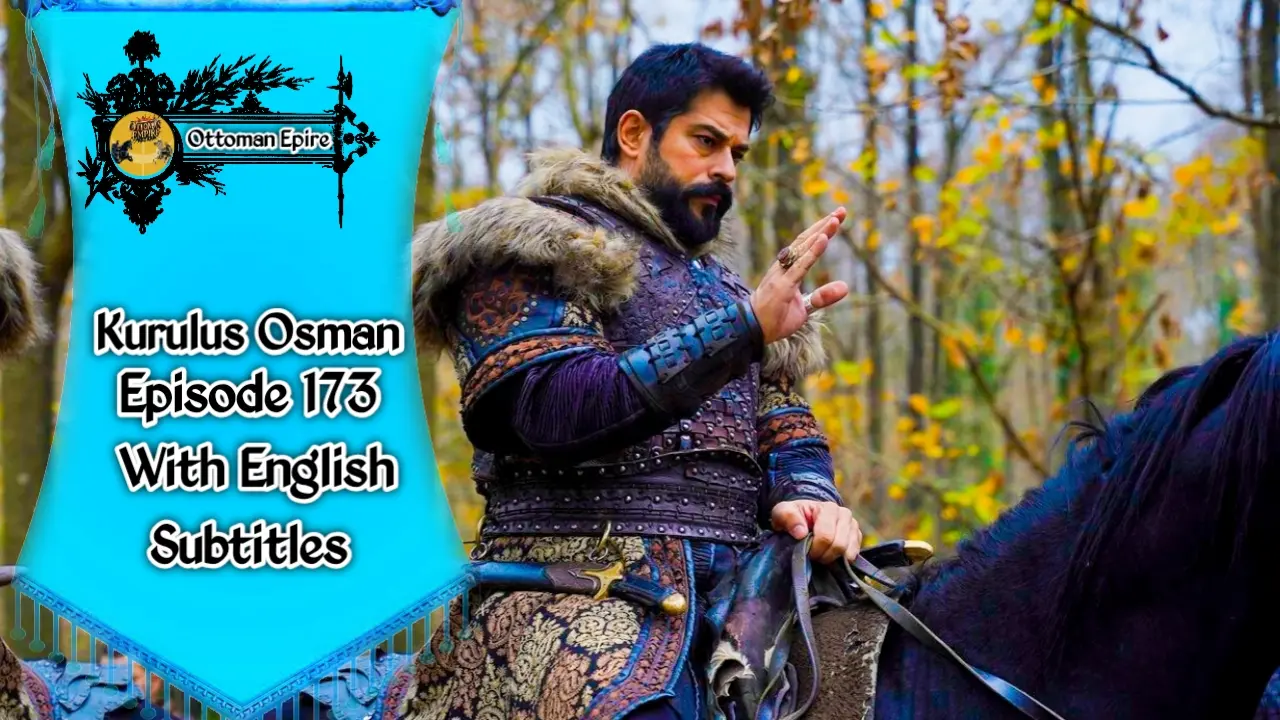
Kurulus Osman Chapter 173 Political Tensions and Leadership Challenges
A Critical Turning Point in Frontier Politics
In the unstable frontier territories of late medieval Anatolia, political authority was often shaped by more than military strength alone. Alliances shifted rapidly, rival leaders competed for influence, and internal loyalty could determine the survival of an entire tribe. Within this fragile political environment, the crisis surrounding Bala Hatun emerges as one of the most significant developments in Osman Bey’s leadership journey.
Bala Hatun has long represented more than a respected figure inside the Kayı tribe. She has served as a stabilizing presence within the household and the wider tribal structure, often preserving internal order while Osman Bey focused on external expansion. Her sudden vulnerability therefore creates more than a personal tragedy. It threatens the emotional and political balance of the leadership itself.
Sofia’s decision to place Bala Hatun in direct danger reveals a strategy designed not to weaken Osman Bey on the battlefield, but to challenge the center of his authority. In frontier politics, targeting the leader’s closest circle could create deeper disruption than direct confrontation.
“Some of the most decisive moments in history begin not with armies, but with a single personal crisis.”
Timeline of Key Developments
| Stage | Development | Political Meaning |
|---|---|---|
| 1 | Bala Hatun placed in danger | Emotional pressure on leadership |
| 2 | Suspicion rises within the tribe | Internal trust begins to weaken |
| 3 | Karesi Bey expands influence | Regional balance shifts |
| 4 | Sofia and Lucas coordinate | External pressure increases |
| 5 | Osman Bey prepares response | Leadership enters a defining test |
Osman Bey’s Response Under Pressure
For Osman Bey, the threat to Bala Hatun creates a deeply personal moment that also carries wider political consequences. Leaders in frontier societies were often judged by their ability to remain composed when personal loss and public responsibility collided.
Rather than reacting only through anger, Osman Bey’s challenge lies in transforming emotional pressure into strategic control. This is what separates a tribal commander from a state-builder. His response must reassure his followers, protect his family, and prevent his enemies from turning private pain into public weakness.
This situation demonstrates an important historical reality. In many early political systems, leadership was inseparable from family. An attack on the household could easily become an attack on political legitimacy itself.
The Deeper Meaning Behind Bala Hatun’s Crisis
At first glance, Bala Hatun’s situation appears to be an individual crisis. However, the deeper meaning lies in what she symbolizes.
Bala Hatun represents:
- Internal balance
- Moral authority
- Continuity of leadership
- Tribal unity
When such a figure becomes vulnerable, the threat extends beyond one person. It becomes a test of whether the political structure itself can withstand emotional disruption.
This is what gives the moment greater importance. The conflict is no longer only external. It has entered the heart of the tribe.
Halime and the Politics of Identity
The story of Halime introduces another powerful dimension to the unfolding conflict. Raised away from her true origins and shaped by hostile influence, she represents a form of political manipulation that extends beyond ordinary rivalry.
In medieval frontier politics, controlling identity could be as powerful as controlling territory. A child raised under opposing influence could become both a symbolic and strategic weapon. Halime’s position reflects how personal histories could be transformed into instruments of political pressure.
Her connection to Poena and the possibility of unknowingly standing against her own blood adds emotional complexity to the wider struggle. It transforms the conflict from a simple rivalry into a deeper examination of identity, memory, and belonging.
Leadership Contrast: Osman Bey and Karesi Bey
One of the most important differences in this chapter lies in the contrast between two leadership styles.
| Leadership Aspect | Osman Bey | Karesi Bey |
|---|---|---|
| Authority Style | Trust-based | Fear-based |
| Political Method | Long-term planning | Immediate control |
| Internal Rule | Unity | Pressure |
| Public Image | Protector | Ruler |
| Strategy | Calculated | Reactive |
This contrast gives the chapter stronger historical value because it reflects a recurring pattern in medieval leadership: some rulers sought loyalty, while others relied on control.
The Hidden Threat Within the Tribe
External enemies are dangerous, but internal uncertainty can be even more damaging. The possibility that a traitor may exist among Osman Bey’s own allies introduces a second layer of tension.
Suspicions surrounding Gencer, Begüm, and Bayhan create a climate where trust begins to weaken. For a leader trying to expand influence, internal division can become more destructive than open opposition.
Osman Bey’s decision to investigate carefully rather than accuse immediately reflects political maturity. A leader who responds too quickly can create fear. A leader who waits too long can invite collapse. The balance between caution and action becomes essential.
Begüm Hatun’s Political Position
Begüm Hatun occupies one of the most uncertain positions in the wider conflict. Her relationship with competing figures places her between survival and loyalty.
Karesi Bey’s interest in her is not merely personal. In frontier politics, marriage could function as a strategic tool. It could strengthen alliances, secure influence, and reshape power relationships without direct confrontation. Kurulus Osman Chapter 173 Political Tensions and Leadership Challenges
For Osman Bey, this creates another difficult challenge. He must determine whether Begüm Hatun is simply caught in events—or becoming part of a larger political shift.
Sofia and Lucas as Strategic Adversaries
Sofia and Lucas operate differently from traditional rivals. Their strength lies in coordination, timing, and psychological pressure rather than open confrontation.
Instead of confronting Osman Bey directly, they create situations where every possible response carries risk. This method reflects a more advanced form of political conflict, where influence matters as much as force.
Their cooperation also introduces a broader lesson: powerful enemies often succeed because they understand the emotional weaknesses of their opponents as well as their military ones.
A Repeating Pattern in Frontier History
One of the most valuable historical themes in this chapter is the repetition of a familiar frontier pattern:
- External threat appears
- Internal trust weakens
- Leadership is tested
- Rival powers expand
- Political identity strengthens or collapses
This pattern appears repeatedly throughout the history of emerging states. The chapter reflects that same historical rhythm, making the story feel larger than a single event.
What This Means for Osman Bey’s Future
The events in this chapter may have long-term consequences for Osman Bey’s leadership.
Possible future effects include:
- Stronger internal discipline
- Greater caution toward allies
- More direct action against rivals
- Emotional transformation in leadership style
- A shift from defensive politics toward decisive expansion
Rather than being a temporary crisis, this may become a defining moment in Osman Bey’s political evolution.
Historical Context Note
The themes reflected in this chapter parallel many realities of early Anatolian frontier history. During the decline of centralized Seljuk authority and the weakening of Byzantine border control, regional leaders often faced simultaneous internal and external pressures.
While individual characters and specific events may be shaped by modern dramatized interpretation, the broader themes—family influence, tribal loyalty, political rivalry, and psychological strategy—closely reflect the realities of medieval frontier leadership.
Key Takeaways
- Bala Hatun symbolizes internal political stability.
- Sofia targets emotional weakness instead of military strength.
- Halime represents identity used as political strategy.
- Karesi Bey reflects fear-based leadership.
- Osman Bey’s greatest challenge may come from within.
Conclusion
The crisis surrounding Bala Hatun reveals far more than a moment of personal danger. It exposes the fragile relationship between family, leadership, and political authority in frontier Anatolia.
Osman Bey now faces a challenge that cannot be solved through strength alone. He must protect the people closest to him while preserving the unity of the tribe and confronting enemies who understand the power of emotional conflict.
What makes this chapter especially important is that it shifts the struggle from the battlefield into the inner structure of leadership itself. And in many historical moments, that is where the most decisive conflicts begin. Kurulus Osman Chapter 173 Political Tensions and Leadership Challenges
Frequently Asked Questions
Why is Bala Hatun important in this chapter?
She represents the internal stability of the Kayı tribe and the emotional foundation of Osman Bey’s leadership.
What does Halime’s story symbolize?
It symbolizes how identity can be shaped and used in political conflict.
Why is Karesi Bey significant?
He represents a rival model of leadership built on control rather than trust.
What role do Sofia and Lucas play?
They create psychological and political pressure instead of relying only on direct confrontation.
How could this affect future events?
The events may reshape Osman Bey’s leadership style and influence future political decisions.