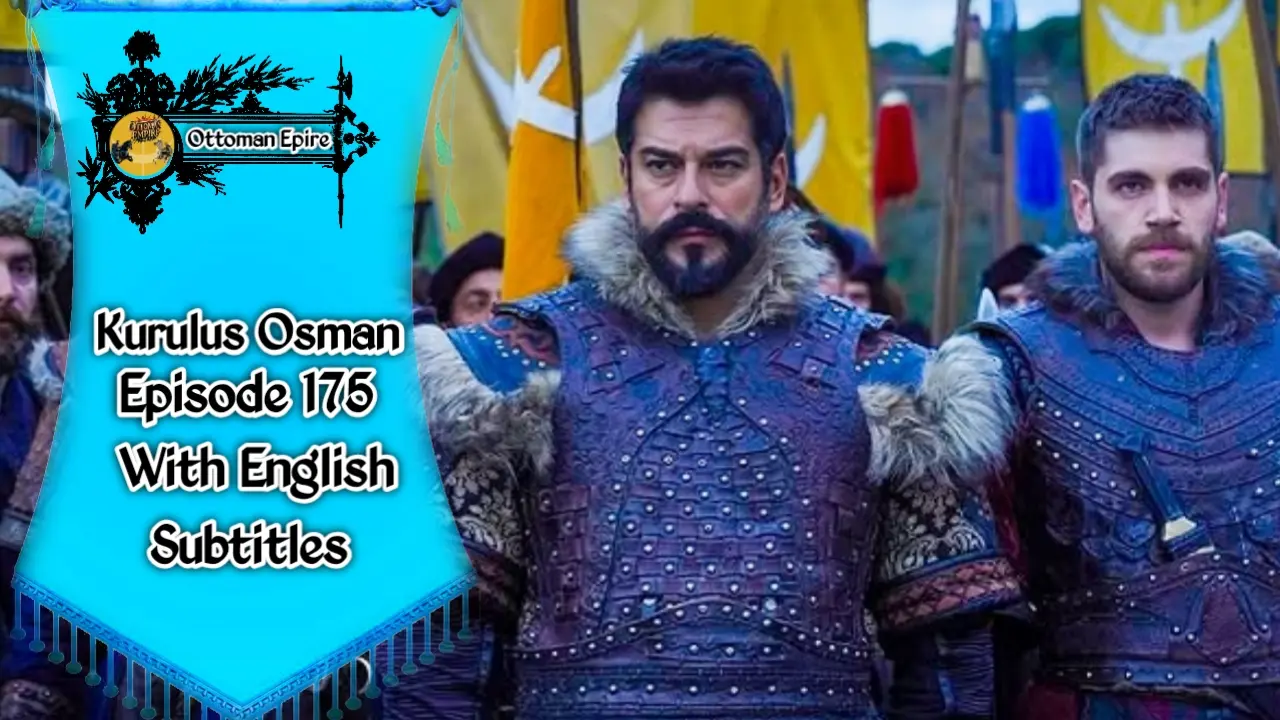
Kurulus Osman Chapter 175: Akhisar Campaign and a Turning Phase
A Continuation of Rising Tension
The situation surrounding Osman Bey does not settle after the previous developments; instead, it becomes more layered and demanding. What had earlier appeared as separate challenges—hidden threats, emotional strain, and internal uncertainty—now begins to merge into a single, continuous pressure. As he moves forward toward Akhisar, he is not entering a new phase, but carrying the weight of everything that has already unfolded. This continuity is important because it shows that leadership in such conditions is never about isolated decisions. Every step forward is influenced by what has already happened, and every delay creates space for new complications. In this environment, even a well-planned move can quickly become difficult to sustain.
Continuity Note:
The pressure seen in this phase is not entirely new. It is a continuation of earlier internal strain and uncertainty, which now begins to influence larger strategic decisions on the ground.
Akhisar as a Strategic Focus
Akhisar stands at the center of this moment not just as a target, but as a necessity. Its position allows control over nearby routes and strengthens presence in the region, making it a logical step in Osman Bey’s broader efforts to stabilize his authority. The approach taken toward the fortress reflects a shift from speed to control. Instead of rushing into direct confrontation, the strategy focuses on surrounding the area, limiting movement, and gradually increasing pressure. This method reduces immediate risk but requires time, and time in such a situation is never neutral. As the siege continues, it begins to attract attention and creates opportunities for other forces to act. Inside the fortress, Lucas maintains resistance, ensuring that the situation does not resolve quickly. His role, while defensive, becomes strategically important because it prolongs the engagement and keeps Osman Bey occupied at a critical moment.
Warfare Insight:
The approach at Akhisar shows a gradual shift in method. Instead of relying on fast attacks, the focus is now on controlled pressure and patience, indicating a more structured way of handling fortified positions.
Emerging Pressure from Outside
While the siege continues, a separate development begins to influence the situation in a significant way. The arrival of a Mongol envoy introduces a different kind of pressure—one that does not operate within the same local framework. The demand for tribute is presented not as a discussion, but as an expectation, placing Osman Bey in a position where any response carries consequences. During his absence, Bala Hatun takes responsibility for managing this moment, and her response reflects careful balance. She neither escalates the situation nor allows it to undermine authority, maintaining stability within the community while avoiding immediate confrontation. This moment highlights how leadership is not limited to direct action; sometimes it is defined by restraint and timing.
Historical Layer:
During this period, Mongol authority still influenced large parts of Anatolia. Many local rulers chose to accept their demands to avoid conflict, which makes refusal a decision with wider implications.
Refusal and Escalation
When Osman Bey addresses the demand directly, his refusal is firm and consistent with his long-term direction. Accepting such a condition would limit his authority and weaken the position he is trying to build. However, the impact of this decision is immediate. The Mongol side responds by increasing pressure, leading to attacks on settlements and creating disruption among the people. This development transforms the situation into something far more complex. The siege of Akhisar no longer exists as a single objective; it now runs parallel with a broader challenge that affects stability across the region. These pressures are interconnected, and managing one without affecting the other becomes increasingly difficult.
Situation Snapshot:
- Akhisar siege continues without resolution
- Mongol pressure begins affecting settlements
- Leadership attention is divided across fronts
Balancing Multiple Responsibilities
At this stage, Osman Bey faces a situation where focus cannot remain fixed in one place. The effort to capture Akhisar requires consistency, while the safety of the people demands attention and response. Shifting entirely toward one side risks weakening the other, creating a continuous need for balance. This is not a situation where clear solutions exist. Instead, it requires ongoing adjustment, careful observation, and the ability to act without losing overall direction. Such conditions often define leadership more than direct confrontation, because they test judgment rather than strength.
Indirect Influence of Sofia and Lucas
As these developments unfold, Sofia and Lucas do not rush into direct action. Instead, they position themselves around the situation, allowing existing pressures to work in their favor. Sofia’s approach is based on timing and awareness. Rather than creating new problems, she builds on what is already happening, ensuring that multiple pressures overlap. Lucas contributes by maintaining resistance within Akhisar, preventing a quick outcome and keeping Osman Bey engaged. Their combined approach shows that influence does not always come from direct involvement; sometimes it comes from controlling how long a situation continues and how different elements interact with each other.
Kurulus Osman Chapter 175: Akhisar Campaign and a Turning Phase
Strategy Breakdown:
Sofia and Lucas do not rely on direct confrontation. Instead, they use timing, delay, and existing pressure points to influence the situation without exposing themselves.
The Role of Information
Another factor that becomes increasingly important is the flow of information. Poena’s presence allows continuous updates about what is happening within the Kayı environment, giving Sofia an advantage in understanding movements and decisions as they develop. This information does not create immediate change, but it allows better planning and more precise timing. In a situation where multiple pressures already exist, knowing when and where to act becomes more valuable than acting quickly. This shift highlights how control during this period is not based only on strength, but also on awareness and coordination.
Continuing Without Retreat
Despite the growing complexity, Osman Bey does not abandon the siege. This decision reflects consistency in his approach and an understanding that changing direction at this stage could create more instability. Instead, he continues applying pressure in a controlled manner, maintaining focus while managing external challenges as they arise. This approach requires patience and endurance, as progress becomes slower and more demanding. The ability to continue under such conditions becomes as important as the original decision to begin the siege.
Historical Context Note
Some elements of this narrative may be influenced by later interpretations, but the overall situation reflects the conditions of late medieval Anatolia. During this period, regional leaders often faced overlapping challenges, where local conflicts and larger political pressures existed at the same time. The presence of Mongol influence, combined with regional rivalries and shifting control, created an environment where decisions required careful balance rather than simple action.
Key Takeaways
- Akhisar serves as a strategic point for control and stability
- The Mongol demand introduces wider regional pressure
- Leadership requires managing multiple challenges at once
- Indirect strategies can shape outcomes without direct conflict
- Information plays a critical role in decision-making
- Kurulus Osman Chapter 175: Akhisar Campaign and a Turning Phase
Frequently Asked Questions (FAQ)
Why is Akhisar important in this phase?
It strengthens control over routes and supports regional stability.
What was the Mongol demand?
A demand for tribute, representing authority and submission.
Why did Osman Bey refuse?
To maintain independence and long-term control.
What is the main challenge here?
Managing both the siege and external pressure at the same time.
How do Sofia and Lucas influence the situation?
By using timing and existing pressure instead of direct action.
What This Means Going Forward:
The current situation does not reach a clear resolution. Instead, it creates a foundation where upcoming developments will depend on how these overlapping pressures continue to evolve. Kurulus Osman Chapter 175: Akhisar Campaign and a Turning Phase
Conclusion
This phase highlights how situations evolve when multiple pressures come together at the same time. The focus is no longer limited to a single objective, but shifts toward maintaining balance while continuing forward. The siege of Akhisar, the response to Mongol demands, and the indirect influence of opponents all combine to create a complex environment where decisions must be steady and controlled. The outcome will not depend on one action alone, but on how consistently these overlapping challenges are managed over time.