Symbolism in Kurulus Osman Season 6 Explained
Kuruluş Osman Season 6 is not just a historical drama built on swords, wars, and political conflicts. Beneath its powerful dialogues and intense battle scenes lies a deep symbolic language that silently narrates the rise of a state, the psychology of leadership, and the cost of betrayal. Every color, every object, every recurring visual motif carries meaning. These symbols are not accidental; they are carefully crafted to connect the audience emotionally with the Ottoman foundation story.
Season 6, in particular, uses symbolism more maturely than previous seasons. The narrative has shifted from simple survival to state-building, and symbols now represent ideology, legitimacy, destiny, and moral struggle. This article explores those hidden meanings in depth—so that when a viewer watches Kuruluş Osman, they no longer just see scenes, but understand them.
Symbolism in Kurulus Osman Season 6 Explained
The Sword as a Symbol of Justice, Not Violence
In Kuruluş Osman Season 6, the sword is no longer just a weapon of war. It represents justice, authority, and responsibility. Osman Bey does not draw his sword impulsively. Each time he holds it, the camera lingers, emphasizing that the sword carries moral weight.
When Osman Bey raises his sword during council gatherings, it symbolizes that power must serve justice, not ego. Unlike traitors and rival beys who unsheathe their swords for personal ambition, Osman’s sword is consistently shown after consultation, prayer, or moral conflict. This visual contrast reinforces the idea that legitimate rule is earned, not seized.
The sword also connects Osman Bey to his ancestors. It visually bridges Ertuğrul Bey’s legacy with the future Ottoman vision, reminding viewers that leadership is inherited not by blood alone, but by values.
The Council (Divan): A Silent Battlefield of Loyalty and Betrayal
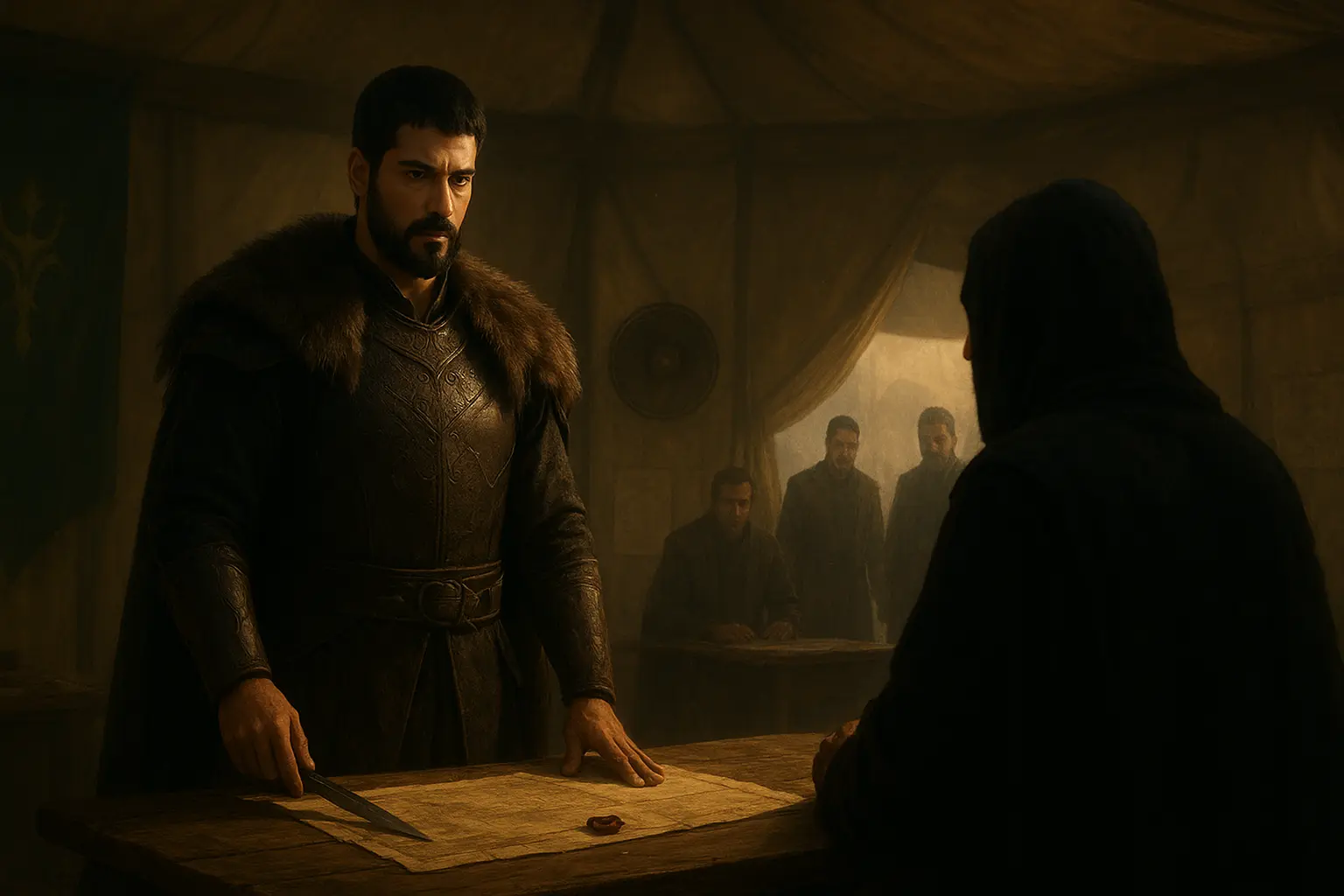
One of the most powerful symbolic spaces in Season 6 is the Divan, the council chamber. On the surface, it is a place of consultation. Symbolically, it is a battlefield without swords.
The seating arrangement itself tells a story. Osman Bey is positioned centrally, representing unity and balance. Those with divided loyalties are often framed at the edges, partially in shadow. This visual language subtly signals betrayal long before it is revealed in dialogue.
When traitors sit beside Osman Bey, the symbolism becomes even stronger. The audience is forced to confront the uncomfortable truth that betrayal often wears the face of loyalty. This is one of the season’s most powerful messages: the greatest threats to a state often come from within.
Tents and Camps: The Evolution from Tribe to State
The visual transformation of the Ottoman camp across Season 6 is deeply symbolic. Early tents appear scattered and modest, reflecting a tribe in transition. As the season progresses, tents become structured, guarded, and centralized.
This evolution symbolizes the shift from nomadic survival to institutional governance. The camp is no longer just a place to rest—it becomes a symbol of authority, order, and sovereignty.
Osman Bey’s tent, in particular, is always placed at the center. It represents the heart of decision-making and destiny. When enemies infiltrate the camp, it symbolizes not just a physical threat, but an attack on the emerging Ottoman identity.
Fire and Light: Faith, Hope, and Divine Guidance
Fire is one of the most recurring symbolic elements in Season 6. Torches, campfires, and burning fortresses all carry layered meanings.
A controlled fire—such as a campfire—represents unity, warmth, and faith. It gathers people together and signifies continuity. In contrast, uncontrolled fire—burning villages or betrayed camps—symbolizes chaos, punishment, and moral collapse.
Light is frequently used to frame Osman Bey’s moments of clarity. When he reaches critical decisions, scenes often transition from darkness to light, reinforcing the belief that his leadership is divinely guided. This symbolism strengthens his legitimacy in the eyes of both characters and viewers.
Costumes and Colors: Visual Hierarchies of Power
Season 6 uses costume design as a symbolic language. Osman Bey’s clothing evolves subtly—darker tones mixed with earthy colors symbolize grounded authority and resilience.
Bala Hatun’s attire reflects spiritual stability. Her lighter, calmer tones symbolize wisdom, faith, and emotional strength. Malhun Hatun’s armor and colors reflect diplomacy and political intelligence, often blending strength with elegance.
In contrast, traitors and antagonists frequently wear sharp contrasts—dark blacks, aggressive reds, or overly ornate designs. These choices visually separate sincere leadership from ambition-driven power.
Mountains and Borders: Destiny and Resistance
Geography itself becomes symbolic in Kuruluş Osman. Mountains are not just backdrops; they represent resistance, endurance, and destiny.
Osman Bey is frequently shown standing on elevated ground, gazing toward distant lands. This imagery symbolizes vision beyond the present—his awareness that the struggle is not just for today, but for generations to come.
Borders, rivers, and crossings represent moments of transformation. Whenever characters cross these boundaries, they face moral or ideological change. These transitions visually reinforce the idea that the Ottoman journey is one of constant evolution.
Betrayal as a Psychological Symbol
Betrayal in Season 6 is not sudden—it is psychological. The series uses silence, hesitation, and eye contact to signal inner conflict.
Traitors are often shown alone, isolated, or framed with barriers between them and others. This visual language reflects moral separation long before open rebellion occurs.
The series suggests that betrayal is born from fear, ambition, and insecurity, not strength. This symbolic portrayal prevents betrayal from feeling superficial; instead, it becomes tragic and human.
Women as Symbols of Moral Balance
Bala Hatun and Malhun Hatun are not side characters. Symbolically, they represent moral balance and strategic continuity.
Bala Hatun symbolizes spiritual guidance and emotional intelligence. Her presence often calms conflicts and redirects aggression into wisdom. Malhun Hatun represents political foresight and diplomatic strength, ensuring that decisions consider long-term consequences.
Together, they symbolize the dual foundations of the Ottoman vision: faith and strategy.
The Oath (Biat): Commitment Beyond Words
The oath scenes in Season 6 are deeply symbolic. When warriors place their hands on swords or bow their heads, the act signifies surrender of ego to collective destiny.
Breaking an oath is portrayed as spiritual death. Those who betray their word are often shown losing respect, allies, and ultimately power. This symbolism reinforces the series’ moral stance: a state is built on trust, not fear.
Connection to Orhan Bey and the Future Empire
Season 6 symbolism also prepares the audience for Orhan Bey’s rise. Osman Bey’s actions are often framed with Orhan present, watching silently.
This visual storytelling suggests transmission of values rather than commands. Orhan learns leadership not through lectures, but by witnessing justice, restraint, and sacrifice.
Symbolically, this ensures continuity—the empire does not end with Osman Bey; it evolves through understanding.
Why Symbolism Makes Kuruluş Osman Powerful
Kuruluş Osman Season 6 succeeds because it trusts its audience. It does not explain everything through dialogue. Instead, it uses symbols to invite interpretation.
This layered storytelling elevates the series from historical drama to cultural narrative, making it resonate beyond entertainment. It teaches leadership, ethics, and resilience without preaching.
Historical Roots of Symbolism in Turkic and Islamic Governance
The symbolic language used in Kuruluş Osman Season 6 does not emerge from cinematic imagination alone. Its foundations lie deep within Turkic steppe traditions and early Islamic political culture, where symbols were not decorative elements but tools of governance, legitimacy, and moral control.
Among Turkic tribes, leadership was never based purely on force. Turkic societies earned authority through kut—the belief that divine will granted power but could also withdraw it. The series reflects this belief whenever Osman Bey pauses before decisive action, consults elders, or chooses restraint over impulse. Repeated focus on prayer, consultation, and moral hesitation reinforces the ancient understanding that fate could strip leadership from those who abused power.
The Divan (council) scenes in Season 6
closely resemble historical Turkic assemblies, where open discussion symbolized collective responsibility. A Bey who ruled without counsel lost legitimacy, regardless of military strength. The series repeatedly frames betrayal within council settings because history treated the rejection of consultation as an attack on the state itself.
Similarly, the symbolic importance of the oath (biat) originates from early Islamic governance. Loyalty was not merely political; it was spiritual. Breaking an oath was believed to sever one’s moral standing within the community. In the series, characters who violate their oath do not immediately fall in battle—instead, they slowly lose trust, allies, and purpose. This mirrors historical belief systems where moral collapse preceded political destruction.
Even visual elements like flags, tents, and seating hierarchy align with Seljuk and early Anatolian beylik practices. Placement within a tent signified rank. Proximity to the Bey reflected trust. Distance indicated doubt. These unspoken rules allowed large tribal confederations to function without written law—something the series subtly communicates through blocking and camera framing.
Understanding this historical context reveals that the symbolism in Kuruluş Osman is not metaphorical exaggeration. It is a visual reconstruction of how early Muslim-Turkic states communicated authority, loyalty, and destiny without institutions, constitutions, or borders. The series succeeds because it respects that logic.
This grounding confirms that Season 6 is not merely dramatizing history—it is translating political culture into visual language.
Key Takeaways
- Symbols in Season 6 represent state-building, not just conflict
- Osman Bey’s sword symbolizes justice, not dominance
- Betrayal is shown as psychological decay, not sudden evil
- Women characters symbolize balance and foresight
- Visual storytelling prepares the ground for Orhan Bey’s future
Table: Major Symbols and Their Meanings
| Symbol | Meaning |
|---|---|
| Sword | Justice and responsibility |
| Fire | Faith, unity, or chaos |
| Council (Divan) | Loyalty vs betrayal |
| Mountains | Destiny and endurance |
| Camp/Tents | Transition from tribe to state |
| Oath | Moral commitment |
Conclusion
Symbolism in Kuruluş Osman Season 6 transforms the series into more than historical fiction. It becomes a reflection on leadership, morality, and destiny. By understanding these symbols, viewers gain a deeper appreciation of Osman Bey’s vision and the foundations of the Ottoman state.
This silent language—spoken through light, space, and silence—ensures that Kuruluş Osman is not only watched, but remembered.
FAQs
Is Kuruluş Osman Season 6 historically accurate in symbolism?
While dramatized, many symbols align with Turkic-Islamic political culture.
Why is betrayal such a major theme?
Because early states were most vulnerable to internal collapse.
Do symbols prepare for Orhan Bey’s rise?
Yes, Season 6 subtly builds ideological continuity.
Is this symbolism intentional?
Yes, it reflects mature storytelling and cultural depth.