Orhan Bey’s History Personality and Rise in the Ottoman Story
Orhan Bey: Architect of the Early Ottoman State
The story of Orhan Bey stands at the crossroads of history, where tribal life began transforming into organized statehood, and where the dreams of Osman Bey found their first true architect. Orhan emerges from the pages of early Ottoman chronicles not as a loud warrior seeking glory, but as a calm, steady, and deeply reflective leader who understood that the destiny of a rising nation demanded discipline more than impulse, foresight more than fury, and compassion more than conquest alone. His journey was shaped by the unstable world around him—declining Seljuks, weakening Byzantines, turbulent Mongol shadow, and the powerful spiritual culture of Anatolia—and from this chaos, he cultivated a vision rooted in stability and long-term growth.
Orhan Bey’s History Personality and Rise in the Ottoman Story
To understand Orhan Bey is to understand the moment the Ottomans shifted from being frontier fighters to a structured political entity. His leadership bridges the gap between nomadic traditions and the foundations of a durable empire, making him not just the son of Osman Bey but one of the essential builders of Ottoman identity. Unlike many heirs throughout history who were born into stabilized monarchies, Orhan inherited a fragile realm that required careful nurturing, strategic thinking, and the courage to reshape old customs to meet a new era. His story is both historical and deeply human—filled with pressures of succession, the quiet weight of responsibility, and the immense challenge of honoring a father’s dream while forging a distinct path of his own.
Early Life & Background
Orhan Bey was born into a world defined by uncertainty. The late 13th-century Anatolia he grew up in was fractured politically and culturally. The Seljuks, once the dominating Muslim power, had been weakened beyond repair. Mongol-appointed governors held influence in many regions, and Byzantine frontiers fluctuated between temporary peace and sudden conflict. It was within this shifting landscape that Orhan learned early lessons in diplomacy, patience, and the necessity of adapting to constant change.
Unlike children raised in palaces, Orhan’s childhood unfolded in warrior tents, tribal councils, and frontier strongholds. He grew up watching Osman Bey negotiate with other Turkish beyliks, confront Mongol threats, and engage Byzantine fortresses along the edges of Anatolia. As a child, Orhan witnessed the unfiltered reality of leadership—the burden of decisions that affected entire tribes, the responsibility to maintain honor, and the delicate balance between war and peace.
His mother, Malhun Hatun, is often credited with shaping Orhan’s disciplined and thoughtful personality. Historical sources emphasize her strength, intelligence, and political awareness, suggesting that she gave Orhan not only noble lineage but the emotional grounding needed to lead a nation. Growing up under the influence of both parents, Orhan internalized the essence of the Kayı way: loyalty, justice, unity, and a relentless drive to turn hardship into opportunity.
Personality and Leadership Traits
Orhan Bey’s personality was markedly different from his father’s. Osman Bey was charismatic, bold, and driven by deep spiritual conviction—a visionary warrior whose presence inspired men before battle. Orhan, on the other hand, carried an aura of calmness. He was deliberate, observant, and strategic, choosing careful planning over emotional decisions. This contrast did not make him any less authoritative; rather, it made him a stabilizing force during a period when measured leadership was essential.
Those who chronicled his era often described him as a leader who preferred listening to speaking, a trait that earned him the respect of scholars, tribal elders, and commanders. He was not interested in personal glory. His focus remained fixed on strengthening the foundations the Ottomans needed for future generations. This humility, combined with intelligence and disciplined restraint, created a rare leadership blend—one that avoided unnecessary risks but was fearless when decisive action was required.
There is also an emotional strength in Orhan’s story. Being the son of a legendary founder comes with immense pressure. Yet Orhan bore this weight with maturity, turning expectation into responsibility. He recognized that Osman’s dream was bigger than any individual victory; it required stability, institutions, and a longer vision. His leadership became the bridge that connected passion with structure, courage with administration, and tribal identity with statehood.
Role in Shaping the Ottoman Foundation
One of Orhan’s most significant contributions was transforming the Ottoman beylik from a tribal frontier principality into an organized state. This transformation did not happen overnight, nor was it the result of a single conquest. It emerged from Orhan’s long-term strategic approach to governance.
He expanded administrative structures, creating systems of taxation, regional governance, and military organization that allowed the Ottomans to grow beyond tribal limitations. Rather than relying solely on nomadic warriors, he initiated the development of professional infantry units—an innovation that later became central to Ottoman military dominance. His reforms created stability in conquered regions, attracting traders, artisans, and scholars, turning frontier towns into flourishing economic centers.
The conquest of Bursa was one of his greatest achievements, not only because it provided a major political center but because Orhan chose to rebuild it with care rather than destroy it. He encouraged the construction of markets, mosques, lodges, and schools, transforming Bursa into a cultural and administrative heart of early Ottoman life. This blend of spiritual investment, economic development, and political structure made his leadership remarkable for its depth and foresight.
Relationship With Osman Bey
The bond between Osman and Orhan was built on mutual respect and shared purpose. Osman recognized early that Orhan possessed the temperament needed for the next stage of Ottoman growth. Where Osman fought to carve space for the Kayı tribe, Orhan’s role was to provide them with permanence and unity.
Their relationship reflects the transition between two eras—one defined by survival and conquest, the other by consolidation and statehood. Osman’s trust in Orhan was not based solely on inheritance but on merit. By the time Osman declared him successor, Orhan had already proven himself through battlefield discipline, diplomatic understanding, and administrative insight.
Emotionally, Orhan inherited not just a beylik but a dream—a dream born from his father’s sacrifices, spiritual guidance from mentors like Sheikh Edebali, and years of struggle against overwhelming odds. Orhan’s life became a continuation of that dream, carried forward with steadiness and dignity.
Challenges and Conflicts During His Rise
Orhan’s rise was not without obstacles. Tribal politics remained volatile, with various Turkish beyliks competing for influence and territory. Maintaining unity within the Kayı tribe required tact, negotiation, and an ability to resolve internal disputes without weakening the overall structure.
The Byzantine threat loomed constantly. Even in decline, the empire possessed fortified cities, shifting alliances, and complex political motivations. Orhan had to navigate these dangers with both sword and diplomacy. Marriage alliances, treaties, and careful timing of conquests became essential parts of his strategy.
Additionally, Mongol influence in Anatolia presented unpredictable challenges. Direct confrontation could have provoked overwhelming retaliation, so Orhan balanced resistance with calculated diplomacy, ensuring the Ottomans remained independent without inviting large-scale conflict.
Through each challenge, Orhan demonstrated the calm judgment that defined his leadership—avoiding reckless battles, preserving tribal unity, and strengthening his people gradually and consistently.
Themes and Symbolism in Orhan Bey’s Journey
Orhan Bey’s life embodies themes that resonate deeply with history and culture. His story reflects the symbolism of transformation—of a tribe becoming a state, of a son fulfilling the dreams of a father, and of a nation learning to balance tradition with innovation.
His leadership symbolized patience, a quality often overshadowed by heroic tales of battlefield valor. Yet it was this patience that allowed the Ottomans to develop the political and social foundations necessary for an empire that would last centuries.
His journey also reflects the symbolic movement from nomadic identity to settled civilization. The construction of institutions, markets, spiritual centers, and administrative offices under Orhan marked the beginning of a cultural identity that blended Turkish, Islamic, and frontier influences into a unique Ottoman character.
Above all, Orhan symbolizes continuity—an enduring link between the humble beginnings of a frontier tribe and the monumental empire it would eventually become.
Historical Context of His Era
The era of Orhan Bey was one of the most dynamic periods in Anatolian history. The Seljuk decline had created a power vacuum that allowed various Turkish beyliks to emerge. Meanwhile, Byzantine control over northwestern Anatolia weakened dramatically due to internal politics and external conflicts. This decline opened opportunities for expansion, but these opportunities were delicate, requiring strategic timing and strong governance.
Sufi spiritual movements were flourishing, offering moral guidance and intellectual frameworks that influenced political leaders. Economic routes shifted towards regions under Turkish influence, attracting merchants and travelers. Each of these changes shaped the environment in which Orhan ruled, and he responded to them with policies that aligned the Ottomans with the emerging currents of Anatolian life.
Through cultural adaptation, economic strategy, and political resilience, Orhan positioned the Ottomans to rise steadily in influence.
Long-Term Influence and Legacy
The legacy of Orhan Bey cannot be measured solely by the lands he conquered. His real legacy lies in the institutions he established, the social stability he promoted, and the vision he implemented for orderly growth. He provided a structured foundation that allowed later sultans—especially Murad I—to expand rapidly into Europe and consolidate power across Anatolia.
His decision to make Bursa a capital changed the trajectory of Ottoman development, turning the state into a cultural and economic center. His military reforms professionalized the army, ensuring the Ottomans had the discipline needed for large-scale campaigns in the future.
Above all, Orhan’s leadership demonstrated that empires are not built by force alone but by structure, unity, and enduring vision.
Timeline Overview
| Event | Era | Significance |
|---|---|---|
| Birth of Orhan Bey | Late 13th century | Grows up in turbulent Anatolia |
| Early Training | Youth | Learns diplomacy, warfare, and tribal leadership |
| Becomes Successor | Final era of Osman | Represents trust and transition |
| Conquest of Bursa | Early 14th century | First major Ottoman capital |
| Military & Administrative Reforms | Mid-reign | Creates foundations for future empire |
Key Takeaways
- Orhan Bey transformed a tribal principality into a structured early state.
- His leadership relied on patience, long-term strategy, and administrative vision.
- He strengthened cultural, economic, and political foundations crucial for later empire-building.
- His calm demeanor and disciplined style created stability during a volatile period.
FAQ
Yes, but he prioritized strategy and governance over battlefield heroics.
It provided political legitimacy, economic strength, and cultural grounding.
He invested in institutions and administration rather than just warfare.
His combination of calm judgment, strategic reforms, and long-term vision.
Conclusion
Orhan Bey’s story is the story of a leader who saw beyond the immediate realities of war and recognized the far greater task of building a lasting state. His life reflects discipline, patience, wisdom, and an uncommon ability to balance tradition with innovation. Where Osman carved a place for his people, Orhan gave them a foundation. His reign represents the quiet strength behind the Ottoman rise, proving that true legacy is built not only by conquests but by structure, stability, and vision.
Through Orhan Bey, the Ottoman dream took its first steps toward becoming a global empire—one built not only on the courage of warriors but on the steady leadership of a man dedicated to the future.
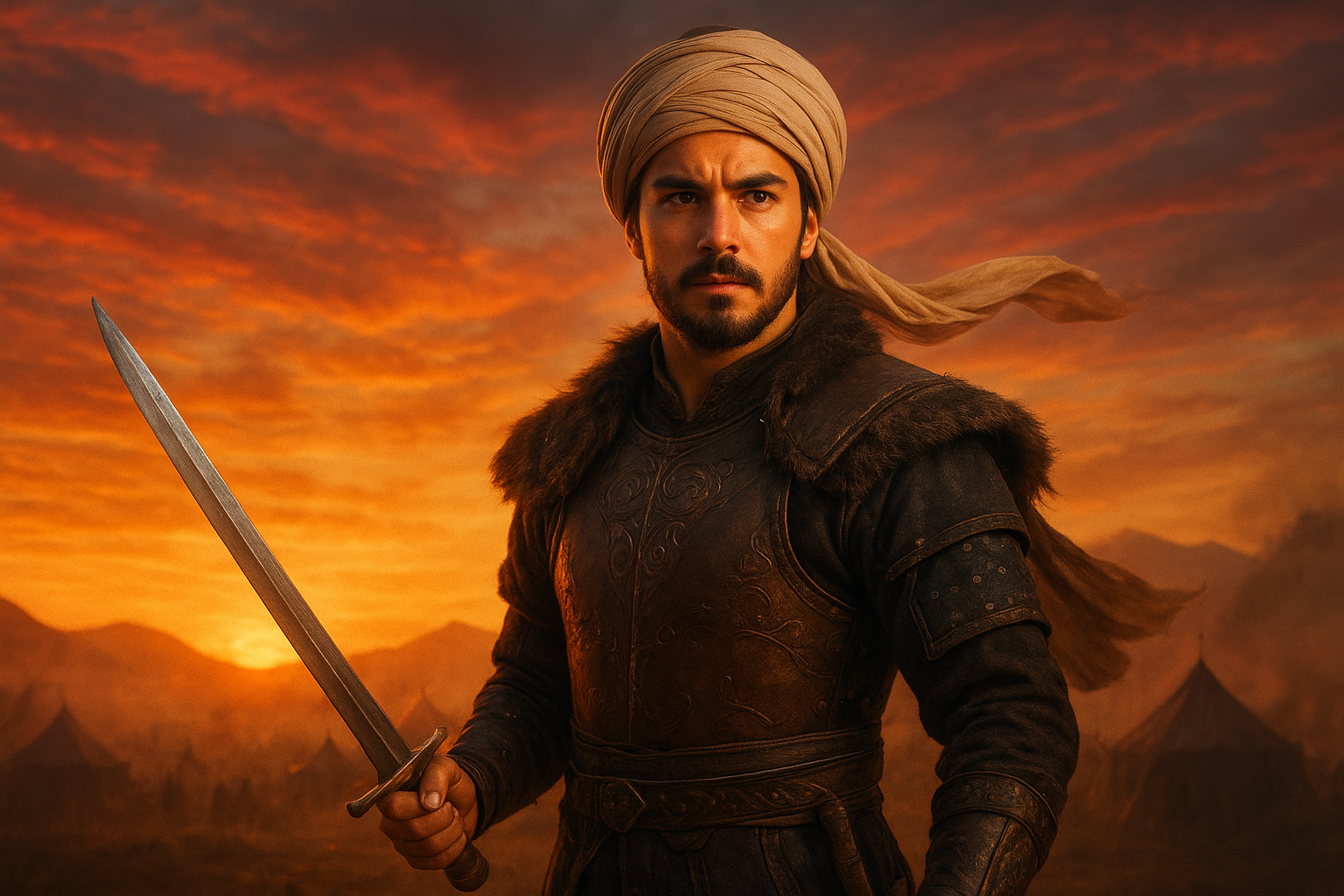
“Image is a visual illustration created for educational and historical representation.”