Unity and Betrayal: Osman Bey’s Leadership in Ottoman History
A Frontier at Dawn: Suspicion in the Kayi Camp
The first light of dawn stretched over the rugged Anatolian hills, spilling across the canvas of tents and campfires of the Kayi tribe. Smoke curled from morning fires while the scent of wet earth mingled with the metallic tang of sharpened swords. Horses shifted uneasily, their hooves scraping the dirt as if sensing the tension in the air. Among the assembly of warriors, one figure sat quietly, cloaked in the guise of loyalty. A smile on his lips belied the dagger concealed beneath his tunic. Osman Bey, unaware of the full extent of the treachery before him, surveyed his camp with the careful eyes of a seasoned leader, weighing the loyalty of every man and woman present.
This is the world of Kuruluş Osman: where every council, every gathering, is a crucible of trust and deception. Unity is not an abstract ideal—it is a necessity for survival on these perilous frontiers. Betrayal does not announce itself with a trumpet but hides in whispered promises and the subtle glint of a concealed blade. Osman Bey, poised as both a tactician and a visionary, senses this invisible threat, yet knows that suspicion without wisdom can fracture his own forces.
The Importance of Unity in a Frontier Tribe
Osman Bey’s leadership thrives on the delicate balance between strict discipline and compassionate guidance. The Kayi tribe exists at the crossroads of empires—the Byzantine realm to the west, the Mongols pressing from the east, and rival Turkic beyliks circling like wolves awaiting any sign of weakness. In this environment, even the smallest fracture in unity can become fatal.
Unity, as the series portrays it, is both moral and strategic. It is faith, loyalty, and coordination woven together. Osman insists on shared responsibility: warriors train together, elders counsel in councils, and decisions are debated before decrees are issued. This careful orchestration allows the Kayi tribe to project strength beyond its actual numbers. Historically, such cohesion was crucial for nomadic Anatolian tribes whose survival depended on collective action against invaders and internal unrest.
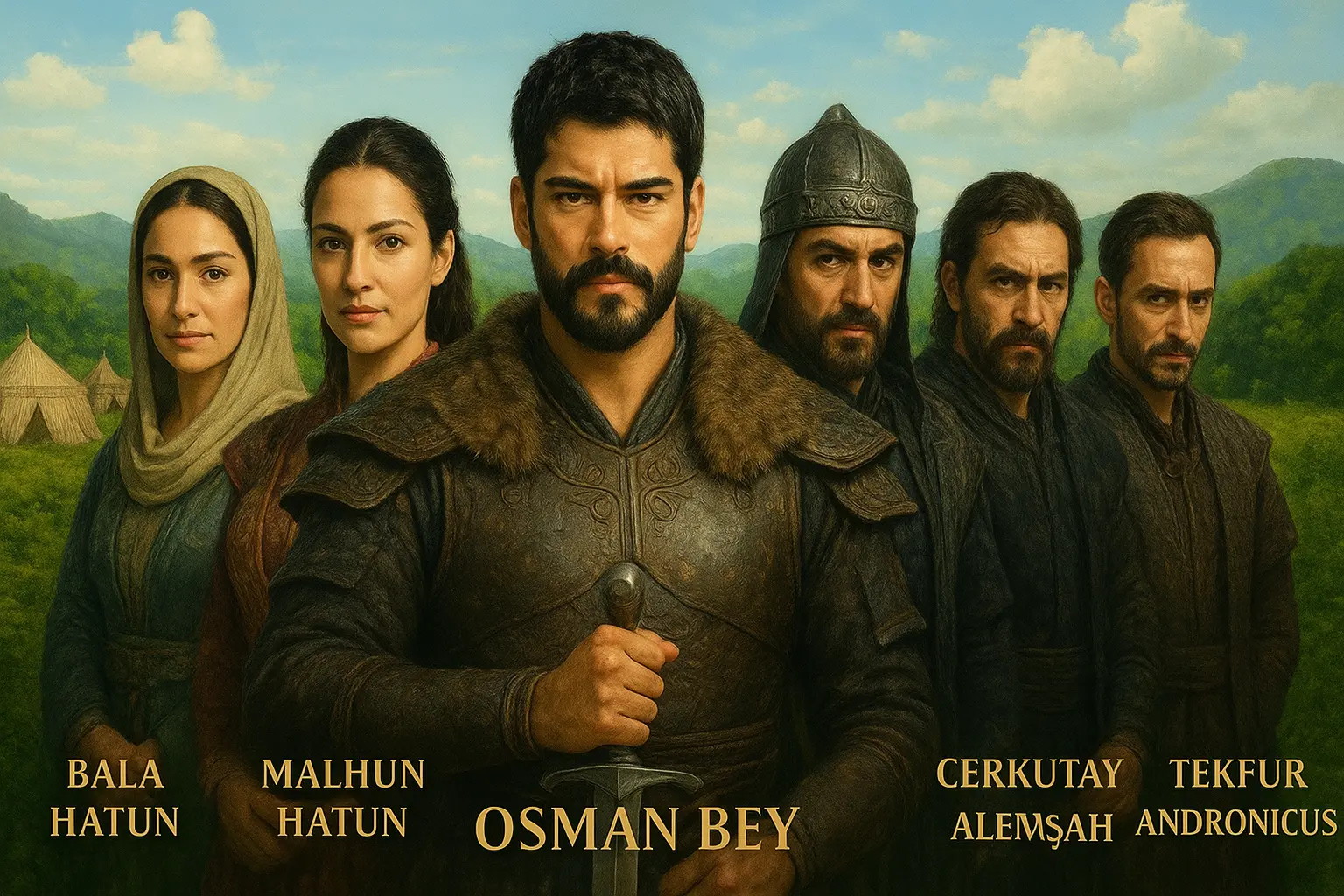
Key Characters at a Glance
| Character | Role | Loyalty | Impact on Osman and the Tribe |
|---|---|---|---|
| Osman Bey | Visionary Leader | Unshakable | Central pillar of unity, moral compass, military strategist |
| Bala Hatun | Spiritual and Moral Guide | Absolute | Provides wisdom, emotional support, strengthens internal cohesion |
| Malhun Hatun | Political Strategist and Advisor | Strong | Diplomatic balance, manages alliances, mediates disputes |
| Nikola | Byzantine Commander | None | Master of deception, orchestrates internal chaos |
| Cerkutay | Former Enemy, Redeemed | Earned | Symbol of redemption and unity restoration |
| Alemşah | Rival Bey | False | Internal disruption, attempts to seize power |
| Kosses (Michael) | Torn Ally | Uncertain | Hesitation leads to moral dilemmas and tactical risk |
| Tekfur Andronicus | Byzantine Ally of Nikola | Treacherous | Executes secret attacks, tests Osman’s vigilance |
This table sets the stage for the complex web of loyalties and rivalries that shape the narrative. Each character’s choices directly influence the survival of Osman’s vision and the Kayi tribe’s cohesion.
Osman Bey: Leadership Amid Constant Threats
Osman Bey carries the weight of an emerging empire on his shoulders. His vision is not merely to expand territory but to unify diverse and often fractious elements into a coherent polity. He approaches leadership with a mix of firmness and fairness, understanding that fear alone cannot secure loyalty. He listens to his council, respects the wisdom of elders, and evaluates even former enemies for their potential contribution to the tribe.
Yet this openness is perilous. Betrayal often comes from within, hiding behind oaths, smiles, and the ceremonial submission of those who, in reality, plot his downfall. Each act of treachery teaches Osman lessons in vigilance and strategic foresight. For example, Nikola’s manipulations are not obvious—they are subtle, exploiting envy and ambition among the Kayi, testing Osman’s ability to read intentions and anticipate the consequences of misplaced trust.
Bala Hatun: Faith as a Shield
Bala Hatun provides more than spiritual guidance; she is the living embodiment of the tribe’s conscience. Where swords defend borders, faith protects hearts and minds. Bala understands that betrayal is not always executed with a blade—it begins in the shadows of doubt, envy, and fear. Through counsel and quiet admonitions, she keeps Osman grounded, reminding him that leadership without moral clarity invites disaster. Her presence strengthens unity not by force but through emotional resonance, ensuring that loyalty is rooted in respect and reverence rather than mere obligation.
Malhun Hatun: Strategy Behind Unity
Malhun Hatun approaches the challenge of unifying the tribe from a political perspective. Born into a lineage that understands the delicate interplay of alliances, she identifies potential fractures before they erupt into full-blown crises. Malhun’s role extends to mediating disputes, negotiating with neighboring beyliks, and counteracting the subtle influence of enemies like Nikola or Alemşah. Her strategies ensure that the Kayi remain cohesive, even when surrounded by hostile powers or internal dissenters. Without such calculated foresight, Osman’s moral leadership could have been rendered ineffective against cunning adversaries.
The Many Faces of Betrayal
Betrayal in Kuruluş Osman is never straightforward. It is as much psychological as it is political. Some betrayals arise from personal ambition; others from fear, jealousy, or tribal insecurity. The series shows that betrayal can be slow and insidious, often occurring in stages:
Early Fractures
In the early episodes, betrayal manifests as hesitation and doubt among Osman’s own ranks. Some beys resent his emerging authority, seeing his decisions as a threat to their own influence. These subtle fissures create vulnerability, giving enemies opportunities to exploit internal divisions without open conflict.
Nikola: The Master Strategist
Nikola embodies calculated treachery. He understands Osman’s strengths and weaknesses and works to undermine unity without engaging directly in battle. By bribing key figures, spreading misinformation, and orchestrating covert attacks, Nikola destabilizes Osman’s internal cohesion. His betrayals highlight the fragility of loyalty and the necessity of constant vigilance.
Alemşah and Internal Power Struggles
Alemşah represents betrayal from within the Turkic world. Claiming legitimacy and influence, he incites doubt and factionalism, challenging Osman’s authority. His machinations weaken collective defense, demonstrating that threats to unity often emerge not from external enemies but from ambitious insiders who seek to manipulate the balance of power.
Cerkutay: Redemption and Rebuilding Trust
Cerkutay’s arc illustrates the possibility of redemption. Initially an enemy aligned with Mongol forces, his loyalty lies elsewhere. His early actions cause suffering within the Kayi tribe, yet over time, exposure to justice, compassion, and Osman’s leadership awakens a moral conscience. The series portrays his transformation as gradual and painful, reinforcing the theme that unity can restore even those who once betrayed it—though at significant cost and with careful management.
Kosses (Michael): The Hazard of Hesitation
Kosses’s ambiguous loyalty demonstrates that betrayal is not always rooted in malevolence. Torn between admiration for Osman and fear of reprisal from past alliances, his hesitation creates tactical and moral dilemmas. His uncertainty threatens operations and forces Osman to navigate complex interpersonal dynamics. This character’s arc emphasizes that betrayal can be passive, yet equally destabilizing.
Psychological Motives Behind Betrayal
Understanding why betrayal occurs is key to analyzing Osman’s challenges. Motivations often include:
- Fear of losing power: Individuals act preemptively to protect influence.
- Jealousy: Rising prominence of Osman provokes envy.
- Tribal insecurity: The fluctuating alliances of Anatolian tribes create constant tension.
- External manipulation: Enemies exploit internal fears for their own advantage.
Explaining these motives adds depth to the narrative and transforms seemingly simple antagonists into realistic, human figures.
Symbolic Meanings in Unity and Betrayal
The series subtly embeds symbolism that enhances the narrative:
- Sword: Represents justice, honor, and the disciplined use of power.
- Tent: Symbolizes the foundation of statehood, governance, and communal order.
- Betrayal: Acts as a cleansing fire, exposing weaknesses in leadership and loyalty.
- Loyalty: A tool for survival, forging alliances that sustain the tribe against external and internal threats.
These cultural cues enrich the storytelling, offering historical and ethical insights without relying on heavy academic language.
From Osman to Orhan: Lessons Passed Forward
Osman’s experiences with treachery profoundly shape Orhan Bey’s leadership style. The young prince inherits not just territory but wisdom etched through trials. Internal betrayals teach the importance of structured governance, institutional checks, and disciplined alliances. Orhan’s eventual centralization of power reflects lessons learned from Osman’s challenges, ensuring that unity is not left solely to personal bonds but is codified and resilient.
Cinematic Scene: The Traitor Among the Tribe
Picture a pivotal moment: Osman Bey convenes a council under the open sky, the mountains casting long shadows over the camp. Warriors kneel, swords glinting faintly, tents flap in the wind. Bala Hatun watches quietly from a distance, sensing unease. In a corner, a man smiles too widely, his hand brushing the hilt of a concealed dagger. His eyes flicker toward Osman, calculating the moment when trust can be exploited. Each word spoken in council carries weight; each decision can trigger chaos or consolidate power. The scene illustrates how tension, observation, and leadership intersect in real time, immersing the reader in the stakes of loyalty and betrayal.
Key Takeaways
- Unity is a moral and strategic necessity.
- Betrayal erodes strength from within before external forces can strike.
- Leadership requires constant vigilance, foresight, and emotional intelligence.
- Redemption is possible but demands careful guidance.
- The success of early Ottoman states depended on the balance of trust, justice, and calculated leadership.
Conclusion: Empires Rise on Trust, Fall on Treachery
Kuruluş Osman demonstrates that empires are not solely threatened by enemies at the gates but by betrayal within the walls. Loyalty and unity are fragile, yet they form the backbone of survival and state-building. Osman Bey’s trials—managing internal fractures, understanding psychological motives, navigating political intrigue, and maintaining moral authority—show that leadership is both a battlefield of ethics and strategy.
“An empire is not destroyed by enemies at its gates, but by betrayal within its walls.”
Through careful cultivation of loyalty, strategic action, and moral discernment, Osman Bey transforms a scattered tribe into a resilient foundation for the Ottoman Empire, leaving lessons in leadership, unity, and vigilance for generations to follow.
- Kurulus Osman Season 6 Episode 167 Osman Bey’s Sacred Oath
- Alparslan Buyuk Selcuklu Season 1 Episode 2 Secrets unfold as Alparslan seeks justice
- Dirilis Ertugrul A Journey of Struggle And Leadership
- Kurulus Osman Season 6 Episode 169 Return of Sofia
- Kurulus Osman Season 6 Episode 170 Osman Bey Marches Toward Akhisar