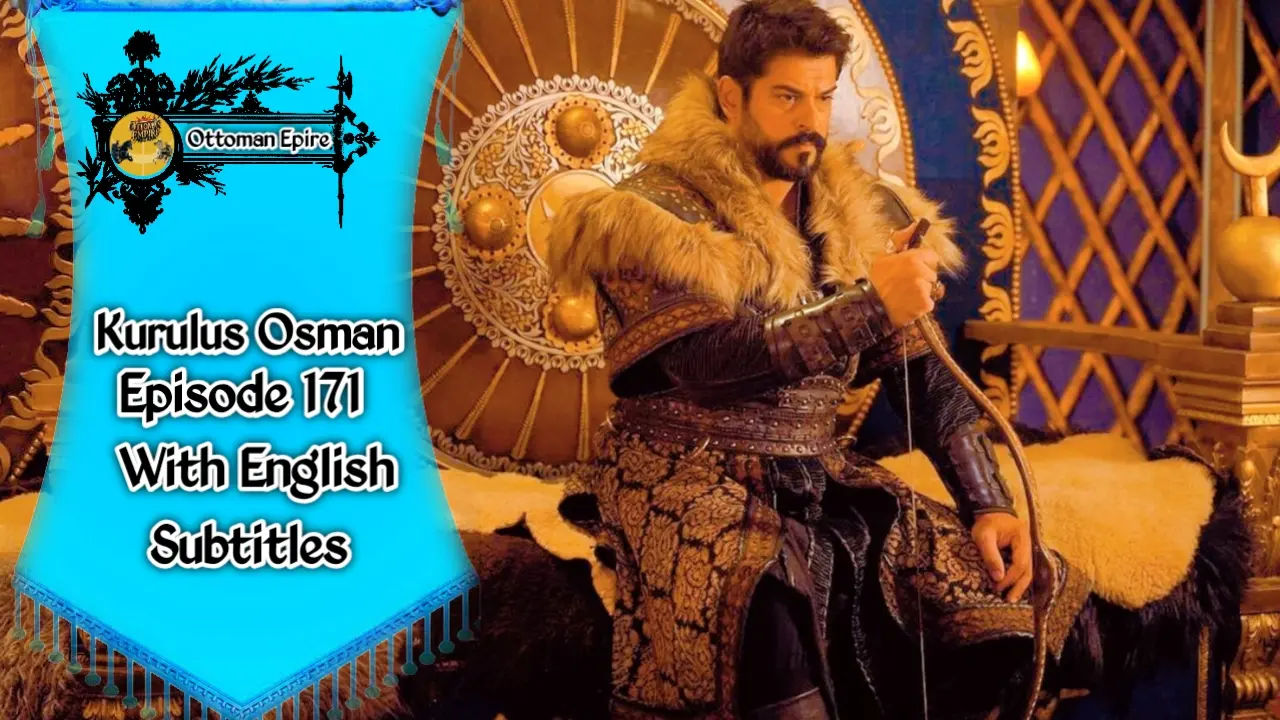
Kurulus Osman Season 6 Episode 171
Trials, Betrayals, and Strategic Brilliance
Introduction: Osman Bey’s Leadership Put to the Ultimate Test
Episode 171 of Kurulus Osman represents a critical juncture in Osman Bey’s journey as a leader, strategist, and son of Ertuğrul Gazi. In this episode, Osman Bey faces multi-layered threats: the abduction of his daughter Fatma Hatun by Sofia and Lucas, political schemes by Karesi Bey, and internal tension among the Kayı tribe members. Beyond action and conflict, this episode delves deeply into themes of loyalty, honor, strategy, and tribal politics. The episode paints a vivid picture of leadership in 13th-century Anatolia, where power was constantly tested through internal rivalries and external threats.
Kurulus Osman Season 6 Episode 171
The abduction of Fatma Hatun is more than a mere plot device—it symbolizes the vulnerability and honor of the Kayı tribe. Through these trials, Osman Bey is forced to navigate the thin line between moral responsibility and pragmatic strategy, reinforcing his evolution from a regional chieftain to a visionary leader capable of uniting the Turkish beyliks.
The Abduction of Fatma Hatun: Emotional and Strategic Stakes
Fatma Hatun’s capture sets the tone for the episode’s tension. Osman Bey, renowned for his foresight and tactical acumen, cannot act impulsively without endangering both his daughter and the stability of Söğüt. In historical context, hostage-taking was a common tactic to destabilize tribes or kingdoms. Leaders like Osman Bey often had to devise plans that combined deception, courage, and strategic patience to secure the safety of their people and kin.
Orhan and Alaeddin, acting as loyal sub-commanders, take the lead in orchestrating Fatma’s rescue. Their mission highlights the deep trust Osman Bey instills in his alps and family, demonstrating the cultural importance of loyalty, honor, and collective responsibility within the Kayı tribe. Each move they make is carefully calculated, reflecting both individual bravery and strategic foresight.
“True leadership is measured not in victories alone, but in the courage to protect those who embody your tribe’s honor.”
Lucas and Sofia: The Art of Deception
Lucas and Sofia’s alliance introduces the elements of external manipulation and political intrigue. and Lucas, a seasoned Byzantine strategist, seeks to weaken Osman Bey through complex subterfuge, while Sofia’s return is driven by vengeance. Her personal vendetta against Osman Bey adds an emotional dimension to the political and military conflict.
This dynamic mirrors historical realities where personal grudges and territorial ambitions often overlapped. Leaders of the period had to be as cunning as they were brave, and the episode illustrates how adversaries exploit personal and political vulnerabilities to achieve their goals.
Table: Adversaries’ Motivations and Strategies
| Adversary | Motivation | Strategy | Historical Parallel |
|---|---|---|---|
| Lucas | Byzantine dominance | Manipulate tribes, create traps | Byzantine interference in Anatolian beyliks |
| Sofia | Personal revenge | Abduction, alliances with enemies | Individual vendettas shaping battles |
| Karesi Bey | Jealousy & territorial expansion | Political scheming, incite conflicts | Inter-beylik rivalries and betrayals |
This table contextualizes how personal ambition and political motives intertwine, emphasizing the historical accuracy of these conflicts within the Turkish beylik era.
Karesi Bey’s Schemes: Jealousy Meets Ambition
Karesi Bey is provoked by Osman Bey’s growing influence. The episode explores his complex psyche: outwardly cooperative but secretly envious and strategic. He embodies the classic tension between allies and competitors, illustrating a common theme in medieval Anatolian politics where temporary alliances were often tactical rather than moral.
Karesi Bey’s attempts to manipulate events from behind the scenes force Osman Bey to anticipate not just the physical threats but also the political moves that could destabilize his authority. This interplay of strategy, cunning, and foresight reflects the historical challenges faced by emergent Turkish leaders consolidating power in the fragmented Anatolian landscape.
Begüm Hatun and Bayhan Bey: Loyalty Tested
The pressures of this episode extend into the inner circle. Begüm Hatun and Bayhan Bey face the risk of being manipulated by Lucas through the capture of key figures like Yusuf and Saruca. Their loyalty becomes a central theme, highlighting how trust, honor, and moral judgment functioned within tribal hierarchies. Their decisions impact not only their own fate but also the broader strategic outcomes for Osman Bey and the Kayı tribe.
Culturally, this reflects the weight of personal integrity and familial loyalty in decision-making—a recurring motif throughout Turkish history and literature.
Orhan and Alaeddin: Courage in Action
Orhan and Alaeddin’s mission to rescue Fatma is both physically daring and strategically critical. This subplot demonstrates that leadership is not confined to the chieftain; the alps and sons of Osman Bey are trained to think critically, act bravely, and execute complex strategies. Historical narratives often highlight similar scenarios where sub-commanders’ bravery determined the survival and prosperity of emerging states.
Their actions also foreshadow Orhan’s potential as a future leader, establishing a narrative connection to the expansion of the Ottoman state in later episodes.
Themes, Symbolism, and Historical Insights
Episode 171 is rich with multiple layers:
- Loyalty vs. ambition: Characters must navigate the tension between personal desires and the collective good.
- Honor and vengeance: Sofia and Lucas represent external threats, illustrating the destructive power of grudges and manipulation.
- Strategic morality: Osman Bey balances ethical leadership with tactical necessity.
- Symbols of power: Söğüt and Karadin represent the heartland of the Turkish beyliks and the legacy of Ertuğrul Gazi.
These elements provide both historical context and deep cultural insight, enhancing the storytelling and making the episode more than mere entertainment.
Table: Character Dynamics and Episode Stakes
| Character | Action | Implication | Lesson / Symbolism |
|---|---|---|---|
| Osman Bey | Crafts strategic rescue for Fatma | Balances tribe’s safety and personal honor | Leadership through foresight |
| Fatma Hatun | Captive | Symbolizes tribe’s honor | Vulnerability of legacy |
| Orhan & Alaeddin | Lead rescue mission | Demonstrates bravery & intelligence | Future leaders in training |
| Lucas & Sofia | Set traps | External manipulation | Threats exploit weaknesses |
| Karesi Bey | Political scheming | Creates tension within alliances | Jealousy undermines loyalty |
Cultural & Historical Interpretations
The episode intricately weaves the historical realities of 13th-century Anatolia with the drama of the series. Hostage situations, tribal rivalries, and leadership dilemmas are all grounded in history. Osman Bey’s ethical decisions, combined with his tactical ingenuity, reflect the qualities required to unify Turkish tribes against both internal dissent and foreign adversaries.
Key Takeaways
- Leadership requires balancing moral duty with practical strategy.
- Loyalty is tested under extreme duress, reflecting both personal and cultural values.
- External threats often exploit personal vendettas, illustrating historical accuracy.
- Sub-commanders’ bravery and intelligence play a critical role in tribal success.
- Historical symbolism enhances narrative depth, connecting characters to broader themes.
FAQs
A1: She embodies the honor and continuity of the Kayı tribe, making her abduction a test of Osman Bey’s leadership.
A1: She embodies the honor and continuity of the Kayı tribe, making her abduction a test of Osman Bey’s leadership.
A3: His secretive scheming creates internal tension, forcing Osman Bey to anticipate both external and internal threats.
A4: Strategic foresight, ethical decision-making, and valuing loyal allies are crucial for long-term success.
A5: Fatma’s rescue, loyalty tests, and enemy plots lay the groundwork for future political and military developments in the series.
Conclusion: A Masterclass in Strategy and Storytelling
Episode 171 demonstrates the richness of Kurulus Osman as a historical drama. It combines action, strategy, emotional depth, and cultural insight to create a compelling narrative. Osman Bey’s ability to navigate complex threats—balancing personal loyalty, moral responsibility, and strategic brilliance—sets the stage for future episodes while highlighting historical truths about leadership and tribal dynamics in Anatolia.
This episode not only entertains but educates viewers about leadership, tribal politics, and cultural values of the era, maintaining the balance of historical accuracy and dramatic storytelling that the series is renowned for.
- Kurulus Osman Season 6 Episode 166 The Fate of Alaeddin Bey
- Kurulus Osman Season 6 Episode 173 Justice Will Be Served
- Dirilis Ertugrul Season 1 Episode 4 The Battle for Honor
- Kurulus Osman Season 6 Episode 170 Osman Bey Marches Toward Akhisar
- Kurulus Osman Season 6 Episode 167 Osman Bey’s Sacred Oath