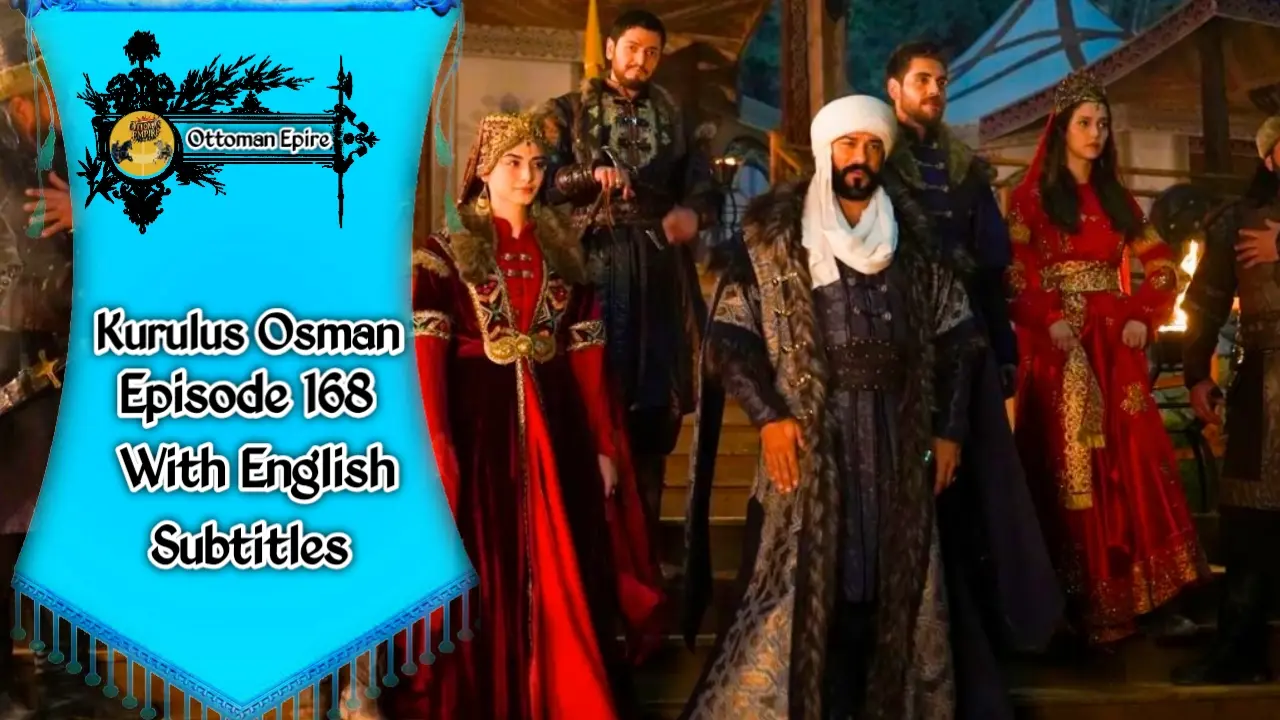
Kurulus Osman Season 6 Episode 168
The Grand Wedding and Fires of Rebellion
Introduction: Triumph Amidst Turmoil
Episode 168 of Kurulus Osman is a masterclass in weaving celebration and conflict into a single narrative tapestry. The episode begins with Orhan Bey and Holofira finally freed from Lucas’s treacherous trap, symbolizing the triumph of courage, strategy, and loyalty. Their liberation sets the stage for a grand wedding in Kayı Obası, orchestrated by Osman Bey himself. However, this joyous occasion is immediately tempered by looming threats: Lucas’s continued schemes, Karesi Bey’s ambitions, and a rebellion erupting in Söğüt. This juxtaposition of festivity and crisis highlights the delicate balance of leadership, demonstrating that true governance demands not just martial skill but also emotional intelligence, foresight, and diplomacy. Osman Bey’s ability to navigate these multiple pressures underscores his status as a visionary leader, capable of simultaneously celebrating victories while neutralizing threats to his tribe.
Orhan Bey and Holofira: Love and Political Alliance
The wedding of Orhan Bey and Holofira is more than a romantic union; it represents the consolidation of alliances and the reinforcement of Kayı Obası’s political stability. Medieval Anatolian culture often leveraged marriages among prominent figures as a strategic tool to solidify loyalty and ensure continuity in governance. In this context, Orhan and Holofira’s union is a political maneuver as much as a personal milestone.
Their journey to this point is fraught with danger, deception, and tests of loyalty. Freed from Lucas’s ambush, their path reflects not only personal courage but also the integration of tactical planning and timely intelligence. For the audience, this sequence emphasizes the interplay between personal relationships and political dynamics, illustrating how individual actions ripple through larger historical and cultural frameworks
Character Analysis: Orhan Bey and Holofira
| Character | Motivation | Conflict | Symbolism | Outcome |
|---|---|---|---|---|
| Orhan Bey | Duty, love, honor | Ambush, political intrigue | Heroism, filial loyalty | Survives ambush, celebrates wedding |
| Holofira | Survival, alliance | Distrust, past rivalry | Loyalty, strategic partnership | Marriage completed successfully |
| Osman Bey | Leadership, family prestige | Balancing celebration with crises | Moral authority, wisdom | Orchestrates wedding, prepares for threats |
Orhan Bey embodies the heroic ideal, combining courage with strategic acumen, while Holofira demonstrates resilience and loyalty, crucial for maintaining alliances. Osman Bey’s orchestration of the wedding showcases his dual capacity as a warrior and statesman, emphasizing the theme of leadership as both protector and unifier.
Karesi Bey and Lucas: The Looming Threat
Despite the Kayı tribe’s victory, Karesi Bey and Lucas continue to pose significant threats. Their collaboration represents the danger of internal jealousy amplified by external opportunism. Lucas’s military acumen, combined with Karesi Bey’s political ambition, creates a potent threat capable of destabilizing Osman Bey’s carefully maintained order.
Lucas’s strategies reflect historical Byzantine military doctrine: deception, multi-front attacks, and exploitation of internal rivalries. Karesi Bey’s ambitions, fueled by envy and fear of Osman Bey’s rising prestige, demonstrate how personal insecurities can have far-reaching political consequences. This alliance underscores the episode’s thematic focus on loyalty, betrayal, and the constant vigilance required of leaders.
Söğüt Rebellion: Crisis at the Heart of Kayı Obası
As the wedding unfolds, news of a rebellion in Söğüt reaches the Kayı Obası, creating a dual-front challenge for Osman Bey. The rebellion reflects the historical reality of frontier governance in Anatolia, where localized uprisings and tribal unrest were frequent. This crisis forces Osman Bey to make rapid, high-stakes decisions, balancing family celebration with the urgent need to maintain order.
From a leadership perspective, this scenario illustrates Osman Bey’s strategic agility. He must allocate resources, deploy trusted commanders, and inspire confidence among his people, demonstrating that effective leadership requires both battlefield prowess and administrative foresight.
Osman Bey: Between Two Fires
Episode 168 poignantly portrays Osman Bey’s position “between two fires”: the joyous wedding of his son and the threatening unrest in Söğüt. Simultaneously managing these challenges highlights his ability to synthesize emotional intelligence with tactical strategy. The episode thus reinforces the historical truth that true leaders are defined not by victories alone but by their capacity to handle multiple crises with poise, wisdom, and fairness.
Gonca Hatun’s Lingering Grief
Gonca Hatun’s sorrow following the loss of her child adds emotional depth to the narrative. Her tension with Holofira exemplifies how personal grief intersects with political dynamics, influencing decisions that have broader implications for the tribe. Her contemplation of leaving Kayı Obası with Alaeddin Bey underscores the theme of human vulnerability within leadership and community structures.
Begüm and Hazal Hatun: Opportunistic Maneuvers
Recognizing the tension between Gonca Hatun and Holofira, Begüm and Hazal Hatun seek to exploit the situation to their advantage. Their scheming illustrates the intricate web of internal power plays within the tribe, highlighting that personal ambitions often impact political stability. Their actions reinforce the episode’s focus on strategic manipulation and the importance of social intelligence in leadership.
Yusuf and Saruca: Courtship Rivalry
The ongoing rivalry between Yusuf and Saruca for Fatma Hatun’s favor adds a layer of interpersonal drama, reflecting the interconnectedness of personal ambitions with tribal politics. Both characters demonstrate strategic awareness of each other’s intentions, emphasizing themes of loyalty, competition, and social positioning.
Themes and Symbolism
- Celebration vs. Crisis: Juxtaposition of Orhan and Holofira’s wedding with rebellion illustrates the dual nature of leadership responsibilities.
- Loyalty and Betrayal: Lucas and Karesi Bey’s schemes depict the perpetual tension between trust and treachery.
- Grief and Healing: Gonca Hatun’s mourning highlights the personal cost of war and political struggle.
- Love and Alliance: Orhan and Holofira’s union symbolizes both emotional fulfillment and strategic political alliance.
Character Analysis Table
| Character | Motivation | Conflict | Symbolism | Outcome |
|---|---|---|---|---|
| Osman Bey | Leadership, family honor | Dual crises | Moral authority, wisdom | Manages wedding & rebellion |
| Orhan Bey | Love, duty | Lucas’s ambush | Heroism | Marriage successful |
| Holofira | Loyalty, survival | Distrust, rivalry | Strategic alliance | Marriage completed |
| Gonca Hatun | Grief | Emotional tension | Vulnerability | Considers leaving |
| Karesi Bey | Ambition | Jealousy | Internal threat | Aligns with Lucas |
Key Takeaways
- Osman Bey exemplifies multifaceted leadership, balancing familial, political, and military responsibilities.
- Lucas and Karesi Bey highlight internal and external threats that require vigilance.
- Celebrations like weddings are not merely personal; they strengthen alliances and consolidate power.
- Emotional dynamics such as grief and rivalry influence tribal politics, reflecting the human element in leadership.
- Rebellions demonstrate the fragility of frontier stability and the necessity of rapid, decisive action.
Quote
“A leader’s true test lies not in victories alone, but in his ability to safeguard both celebration and crisis with equal resolve.”
FAQ
Orhan Bey and Holofira marry, Osman Bey manages rebellion and external threats, and Lucas and Karesi Bey continue scheming.
He strategically divides attention, deploying resources and trusted commanders while maintaining morale.
Her grief over her child and tension with Holofira drives her desire to depart with Alaeddin Bey.
They manipulate social tensions to increase their influence within the tribe.
It represents personal fulfillment and the consolidation of political alliances, strengthening Kayı Obası.
Conclusion
Episode 168 masterfully balances joy and crisis, demonstrating Osman Bey’s leadership across multiple dimensions. The wedding of Orhan Bey and Holofira symbolizes unity and political consolidation, while Lucas’s schemes, Karesi Bey’s ambitions, and the rebellion in Söğüt test Osman Bey’s strategic capabilities. The episode reinforces the central theme that true leadership encompasses courage, wisdom, emotional intelligence, and the ability to navigate complex social and political landscapes simultaneously.