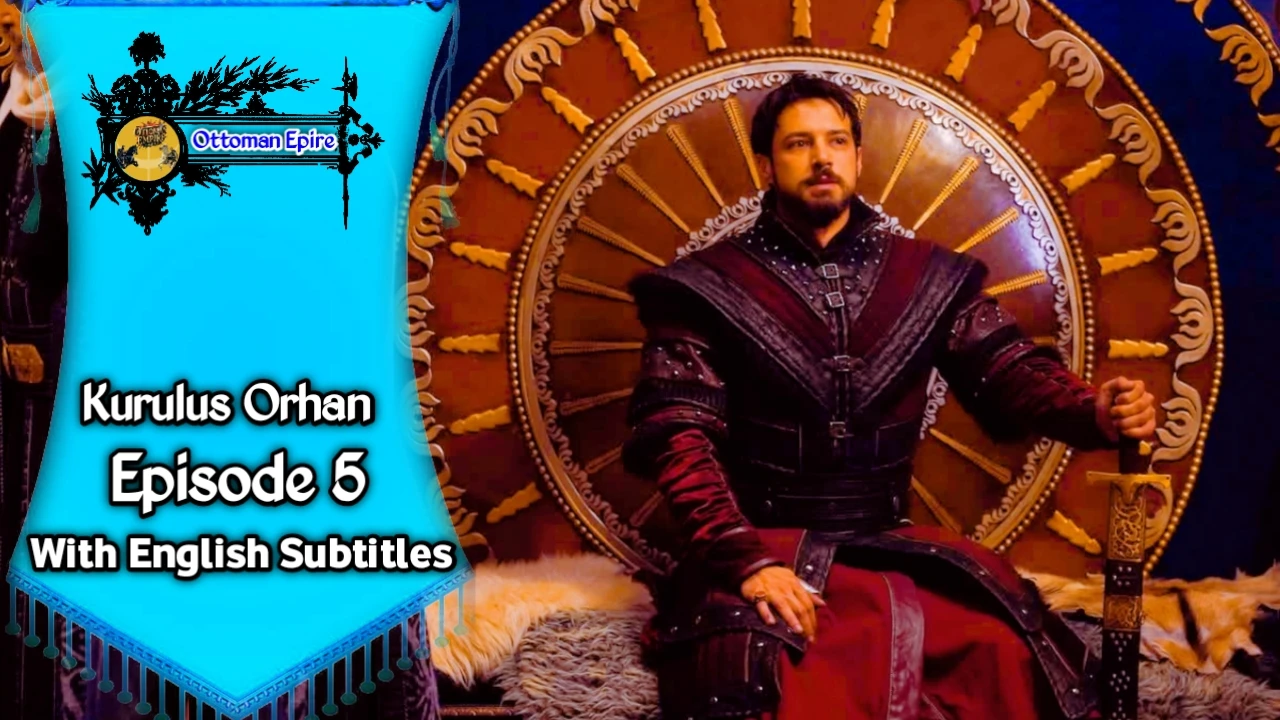
Kurulus Orhan Chapter 5 Power and Authority Tested
The period that followed the passing of authority into Orhan Bey’s hands marked one of the most delicate transitions in early Ottoman frontier history. Leadership, once anchored in the towering presence of Osman Bey, now had to function through institutions, loyalty, and collective consent rather than personal legacy alone. This chapter unfolds at a moment when power appears stabilized on the surface, yet beneath that calm lies resentment, ambition, and unfinished violence. What is at stake is not merely who sits on the post, but whether the Kayı polity can survive its transformation from a charismatic leadership into an ordered system of rule.
Orhan Bey’s assumption of authority introduces a new political reality. Every decision he makes becomes a precedent. Every challenge he faces tests not only his strength, but the legitimacy of the new order itself. The seal he receives is more than a symbol; it is a responsibility that binds him to justice, restraint, and foresight in a world where mistakes are paid for in blood and division.
The Seal of Authority and the Fragile Balance of Power
When Orhan Bey formally receives the seal, the immediate atmosphere within the Kayı camp appears to settle. The visible transfer of authority reassures many who feared prolonged instability. In Turkic-Islamic political tradition, the seal represents lawful command — an entrusted authority rather than personal ownership. By accepting it, Orhan does not claim superiority over others; he accepts accountability before God and society.
Yet political balance is never static. While one set of tensions eases, others emerge. Leadership transitions often expose unresolved rivalries, and the Kayı camp is no exception. Some view Orhan’s rise as continuity, others as disruption. The very act that stabilizes governance simultaneously unsettles individuals who benefited from the old hierarchy.
This moment illustrates how early frontier governance functioned: authority was recognized publicly, but acceptance had to be reaffirmed privately. The seal grants Orhan the right to command, but not automatic obedience. That obedience must be earned through decisions that protect the collective interest without humiliating dissenters.
Şahinşah Bey: Loyalty Displayed, Resentment Concealed
Among those who publicly acknowledge Orhan Bey’s authority is Şahinşah Bey. Before the gathered beys, he pledges allegiance and kisses Orhan’s hand, performing the ritual that confirms submission to the new order. On the surface, this act signals unity. Politically, it prevents immediate fragmentation.
However, ritual obedience does not erase personal ambition. Şahinşah Bey’s removal from military command strikes at his sense of identity and influence. In frontier society, command is not merely an administrative role; it is a source of honor, loyalty, and relevance. Losing it creates a void that cannot easily be filled.
Resentment begins to take root, not as open rebellion but as silent opposition. Şahinşah’s anger is inward, controlled, and therefore more dangerous. Rather than confronting Orhan directly, he begins to consider indirect ways to obstruct his rule. This response reflects a common pattern in political history: when formal power is lost, informal resistance emerges.
Orhan Bey, aware of these undercurrents, chooses not to escalate the situation publicly. Instead, he focuses on strengthening the legitimacy of his leadership through action rather than confrontation. His goal is to secure the entrusted authority — the emanet — by proving that stability and justice under his rule are not theoretical promises, but lived realities.
Yarhisar as a Test of Justice and Responsibility
Orhan’s attention turns toward Yarhisar, not out of ambition, but out of obligation. The loss suffered there remains unresolved, and unaddressed injustice corrodes legitimacy. In Islamic governance, justice is not optional; it is foundational. A ruler who ignores the blood of the wronged forfeits moral authority, regardless of formal power.
Together with Abdurrahman and Kan Turalı, Orhan devises a calculated plan to reclaim Yarhisar. The process is deliberate, not impulsive. Reconnaissance precedes action, alliances are weighed, and timing is chosen carefully. This approach reflects Orhan’s emerging leadership style: measured, strategic, and conscious of consequences.
The operation is not framed as vengeance, but as restoration. By seeking to reclaim Yarhisar, Orhan signals that leadership under his authority will not tolerate unresolved injustice. Success here would demonstrate that the new order can protect its people, honor its martyrs, and act decisively without descending into chaos.
This moment becomes Orhan’s first major trial on the post. Victory would consolidate trust. Failure would validate his critics. The stakes could not be higher, because this action sets the tone for how authority will be exercised going forward.
Flavius After the Collapse of the Bursa Tunnel
Elsewhere, the collapse of the Bursa tunnel reshapes the fate of Flavius. The tunnel’s destruction eliminates retreat and negotiation alike. Strategically cornered, Flavius faces a reality common to defeated actors in frontier conflicts: when options vanish, desperation takes command.
With no path backward, Flavius chooses the sword over strategy. Learning of Orhan Bey’s sword-girding ceremony, he identifies a symbolic target. Such ceremonies represent continuity, legitimacy, and divine sanction. To strike at that moment would be to undermine not only a man, but the idea of lawful succession itself.
Flavius’s plan reveals how symbolic violence functions in political संघर्ष. The intent is not simply assassination, but disruption — to replace order with fear, to fracture morale at the moment unity is proclaimed. His choice reflects a final gamble by someone who understands that survival now depends on chaos.
Sword-Girding and the Meaning of Legitimate Rule
The sword-girding ceremony holds profound meaning within Islamic and Turkic tradition. It marks the ruler’s commitment to justice, defense of the community, and restraint in the use of power. The sword is not a tool of conquest alone; it is a reminder of responsibility.
By participating in this ceremony, Orhan Bey aligns his rule with moral accountability rather than personal dominance. This public act strengthens his legitimacy, making any attack against him not merely political, but symbolic defiance against order itself.
Flavius’s plot, therefore, threatens more than Orhan’s life. It aims to disrupt the moral narrative of the new leadership. Whether the attempt succeeds or fails, it exposes the vulnerability that accompanies moments of transition, when symbols are powerful but defenses are still forming.
Turning Toward İznik: Projection of Power Without Occupation
With internal obstacles gradually addressed, Orhan Bey broadens his strategic vision. His focus shifts toward İznik, not as an immediate conquest, but as a message. By tightening pressure around Bursa and signaling resolve toward İznik, Orhan demonstrates an understanding of psychological power.
His stance before the İznik tekfur is firm and uncompromising. There is no excess threat, no unnecessary aggression. Instead, Orhan communicates clarity: the era of hesitation has ended. This approach reflects a ruler who understands that power does not always require immediate action; sometimes it requires unmistakable intent.
This moment opens new political possibilities. Allies reassess their positions, adversaries reconsider their assumptions, and the frontier landscape subtly shifts. Orhan’s leadership begins to extend beyond reactive defense into proactive statecraft.
Character Analysis: Orhan Bey and Şahinşah Bey
| Figure | Motivation | Method | Risk |
|---|---|---|---|
| Orhan Bey | Legitimate, just rule | Strategy, symbolism, restraint | Resistance from within |
| Şahinşah Bey | Retain relevance | Silent opposition | Isolation, loss of trust |
Themes and Symbolism
- The Seal as entrusted authority, not ownership
- The Sword as moral responsibility, not raw power
- Yarhisar as unresolved justice
- İznik as future-oriented strategy
These elements foreshadow a transition from tribal leadership to structured governance.
Key Takeaways
- Authority requires continuous validation through justice
- Public loyalty does not guarantee private acceptance
- Symbolic acts shape political reality
- Early leadership decisions define long-term legitimacy
Conclusion
This chapter marks the true beginning of Orhan Bey’s rule. Authority is no longer theoretical; it is tested, resisted, and asserted. The challenges he faces are not accidents, but natural consequences of transformation. By choosing restraint over cruelty and strategy over impulse, Orhan begins to shape a political order capable of enduring beyond personalities.
What follows will determine whether this emerging system becomes a lasting state or fractures under the weight of its own contradictions.
FAQ
Why is the seal so important?
Because it represents lawful authority entrusted by the community, not personal dominance.
Why does Şahinşah Bey oppose Orhan indirectly?
Because open rebellion would isolate him; silent resistance preserves influence.
Why is İznik targeted symbolically first?
Because psychological pressure can reshape alliances without immediate war.