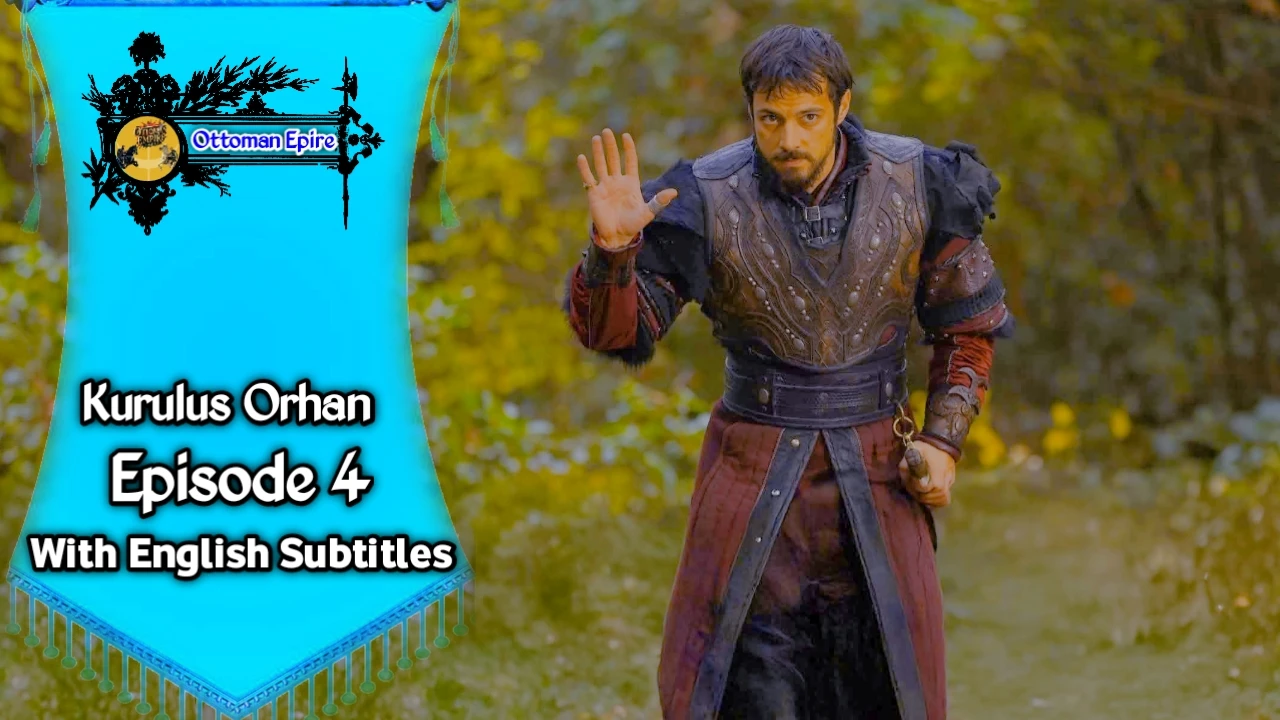
Kurulus Orhan Season 1 Chapter 4 Kayi Tribe in Leadership Crisis
The period following Osman Bey’s era was not marked by peace or certainty. It was a time when authority had to be proven repeatedly, not inherited quietly. The Kayı tribe, positioned on the volatile frontier of northwestern Anatolia, stood between survival and dissolution. External enemies watched closely, while internal disagreements quietly weakened the foundations of leadership. In this tense atmosphere, Orhan Bey emerged as a figure caught between duty and resistance, responsibility and rebellion.
What unfolded during this time was not a single clash, but a sequence of decisions that exposed how fragile power becomes when unity disappears. The struggle was not only against swords and armies, but against mistrust, ambition, and the dangerous belief that authority could be divided without consequence.
Orhan Bey and Nilüfer Hatun: Loyalty Tested Beyond the Safety of the Oba
Orhan Bey was fully aware that the greatest danger facing the Kayı people did not come solely from hostile forces outside the tribe, but from the erosion of unity within it. The idea of divided leadership threatened every structure the tribe relied upon — military discipline, judicial fairness, and collective obedience. Allowing more than one center of authority would invite chaos, and Orhan knew that once such disorder began, it would be nearly impossible to contain.
During this fragile moment, Nilüfer Hatun stood as Orhan’s closest supporter. Her presence was not symbolic; it was practical and moral. As they traveled through the forest, their journey carried meaning beyond movement from one place to another. It represented Orhan’s attempt to confront danger before it reached the heart of the tribe, to act rather than react.
The ambush that followed was neither random nor rushed. Hidden attackers struck with precision, aiming to isolate and overwhelm. Orhan and Nilüfer found themselves surrounded, exposed to the harsh reality of frontier life where leadership offered no protection from sudden violence. This moment revealed how thin the line was between authority and vulnerability.
Their survival depended on loyalty forged through shared struggle. Kan Turalı and Abdurrahman arrived not by coincidence, but by commitment. Their intervention shifted the balance, breaking the trap and forcing the attackers to retreat. More importantly, it confirmed that Orhan still commanded genuine allegiance among warriors who valued justice, courage, and discipline over political maneuvering.
Confronting Temurtaş: Negotiation as a Risky Necessity
While danger lurked in the wilderness, the larger threat tightened around Bursa. As long as the pressure on the city continued, the Kayı tribe would remain weakened economically and politically. Trade routes suffered, alliances grew unstable, and internal disputes intensified. Orhan Bey recognized that the situation demanded action, even if that action placed him in opposition to his own kin.
The decision to meet Temurtaş was born of necessity rather than ambition. Temurtaş thrived in moments of division, using instability to strengthen his own position. Orhan approached him not as a subordinate seeking favor, nor as an aggressor demanding submission, but as a leader attempting to prevent further destruction.
In their exchange, Orhan accepted responsibility for restraining Alaeddin Bey and Şahinşah Bey, understanding that unresolved rivalry only served external interests. This promise carried heavy consequences. Failure would damage Orhan’s credibility, while success would deepen resentment among those who saw compromise as surrender.
This encounter revealed the nature of power on the frontier. Authority was not absolute; it depended on perception, timing, and the willingness to bear blame. Orhan’s choice to negotiate exposed him to criticism from all sides, yet refusing dialogue would have guaranteed further bloodshed. It was a decision made in uncertainty, with no guarantee of reward.
Flavius and Fatma Hatun: Vengeance Bound by Inner Conflict
In Söğüt, far from open councils and battlefield decisions, another struggle unfolded quietly. Flavius, consumed by the desire for revenge, began constructing a new plan. Unlike the frontier warriors, his methods relied on patience, calculation, and psychological pressure rather than open confrontation.
Fatma Hatun stood at the center of this tension. Each encounter between them carried unspoken threats, restrained anger, and unresolved intentions. Flavius found himself divided between his hatred and his reluctance to cause her harm. This hesitation slowed his plans, revealing that even those driven by vengeance remain constrained by personal boundaries.
Their interactions demonstrated that conflict does not always advance through action. Sometimes it is defined by restraint, by decisions not taken. Flavius’s inability to act decisively created space for events elsewhere to reshape the balance of power, showing how hesitation can alter the course of larger struggles.
Yarhisar in Flames: Violence as a Message of Control
Any hope of restraint vanished with the assault on Yarhisar. Temurtaş ordered a brutal raid, abandoning negotiation in favor of terror. The attack was not simply an act of violence; it was a political message. By striking Yarhisar, he aimed to demonstrate what awaited those who resisted his influence.
The consequences were devastating. Dozens were killed or wounded, and the Kayı tribe was left to mourn warriors whose loss weakened both its strength and morale. These were not distant casualties, but men whose absence would be felt in every gathering and every defense line.
In the aftermath, Malhun Hatun confronted Alaeddin Bey with harsh clarity. She warned that internal conflict only opened the door wider for enemies. Her words reflected a core principle of both tribal tradition and Islamic ethics: division invites destruction, and pride cannot be allowed to outweigh justice and unity.
Her intervention reframed the crisis. This was no longer a matter of personal rivalry, but one of collective survival. The suffering at Yarhisar exposed the cost of indecision and rivalry more clearly than any council debate could.
Kurulus Orhan Season 1 Chapter 4 Kayi Tribe in Leadership Crisis
Brothers Divided: When Authority Breaks into Violence
Despite all efforts to contain the growing crisis, the confrontation between Orhan Bey and Alaeddin Bey reached its breaking point. Orhan sought reconciliation, believing that preventing further bloodshed was his duty. Alaeddin, however, viewed resistance as defiance.
The order for Orhan to go to Karacahisar was not merely a command; it was a declaration of dominance. Orhan’s refusal stripped the conflict of its final layer of diplomacy. What followed was a physical clash witnessed by the entire tribe, marking the collapse of internal restraint.
The sight of two brothers fighting publicly shattered confidence in leadership. Authority, once upheld through custom and consultation, descended into force. This moment exposed the failure of the mechanisms meant to resolve disputes peacefully.
The decision to exile Orhan Bey was swift and final. Intended to restore order, it instead deepened uncertainty. Removing a central figure of leadership at a time of external threat left the tribe vulnerable and divided, with no clear path toward reconciliation.
A Tribe Transformed by Loss and Division
When the dust settled, the Kayı tribe stood fundamentally changed. Loyalty had been tested, blood had been spilled, and authority had fractured. Orhan Bey’s removal did not end the conflict; it displaced it, allowing unresolved tensions to linger beneath the surface.
Alaeddin Bey’s authority, asserted through force, lacked the moral consensus required for stability. The people were left to wonder whether power exercised without unity could truly protect them. From a broader historical perspective, this period illustrates the painful reality of state formation on the frontier — a process shaped as much by internal struggle as by external pressure.
Leadership in Islamic and Turkic tradition is an amanah, a trust that must be carried with justice and restraint. When that trust is contested, its collapse affects every layer of society. The events described here represent a moment of rupture, one that would define the future direction of the Kayı people and shape Orhan Bey’s path in the years to come.