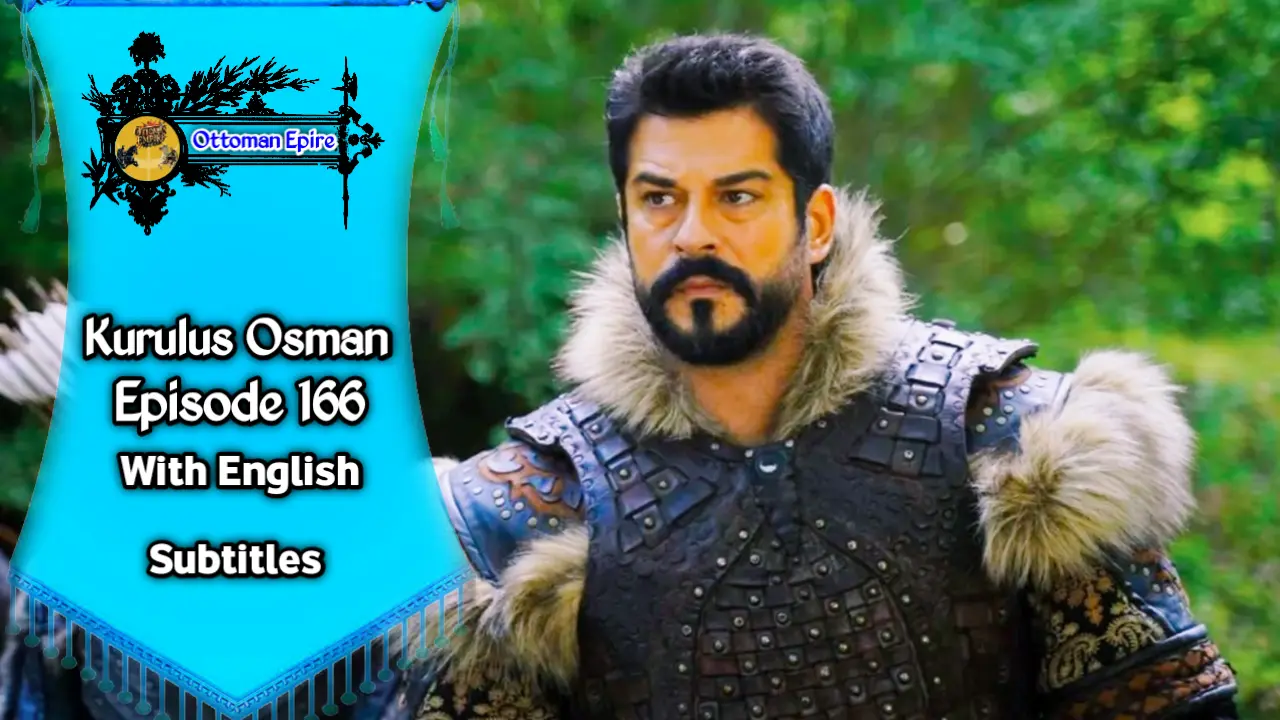
Kurulus Osman Chapter 166 The Fate of Alaeddin Bey
Introduction
Kurulus Osman Chapter 166 represents a decisive phase in the evolution of leadership and political organization on the frontier. At this stage, the narrative moves beyond the idea of simple territorial expansion and instead focuses on the deeper process of governance, stability, and authority. Osman Bey’s vision is no longer limited to conquest; it is now centered on establishing a structured and enduring political system that can unite the Turkish beyliks under a single framework. This transformation highlights the shift from a warrior-based leadership model to a more organized and state-oriented approach.
In such an environment, leadership requires more than strength and courage. It demands foresight, discipline, and the ability to manage complex relationships among allies and rivals. The developments in this chapter reflect how authority is built gradually through consistent decision-making and strategic planning. At the same time, internal unity becomes a central concern, as external threats continue to test the stability of the emerging system. This balance between expansion and consolidation defines the core direction of Osman Bey’s leadership.
Alaeddin Bey’s Fate and the Human Cost of Leadership
One of the most significant aspects of this chapter is the condition and fate of Alaeddin Bey, which introduces a deeper human dimension to the narrative. His situation reflects the risks and sacrifices that often accompany leadership and expansion. While Osman Bey achieves strategic success in capturing Karadin Castle, the outcome also highlights the consequences faced by those who stand at the forefront of such efforts. Alaeddin Bey represents loyalty, resilience, and dedication, making his role essential to the stability of the broader political structure.
His condition serves as a reminder that leadership is not defined solely by victory but also by responsibility toward those who contribute to long-term goals. The ability to protect allies, maintain morale, and ensure continuity becomes crucial in such circumstances. Osman Bey’s response to this situation reflects a balance between determination and responsibility, showing that effective leadership requires both strength and compassion.
At a broader level, this development emphasizes how early state formation involved not only military achievements but also the management of human resources and internal cohesion. Leaders had to consider the well-being of their followers while continuing to pursue strategic objectives. This dual responsibility adds complexity to decision-making and highlights the importance of maintaining trust within the leadership structure.
The Strategic Importance of Karadin Castle
The capture of Karadin Castle stands as a major turning point in this chapter, representing both military success and administrative opportunity. Castles during this period were not merely defensive structures; they served as centers of authority, control, and regional influence. By securing Karadin Castle, Osman Bey strengthens his position and expands his ability to manage surrounding territories.
However, the significance of this victory goes beyond immediate strategic gain. The question of who will control the castle introduces internal political considerations, as different figures express their interests and expectations. This situation requires careful evaluation, as any decision has the potential to influence unity and stability within the system. Osman Bey approaches this challenge with discipline and long-term thinking, ensuring that his choice aligns with broader objectives rather than short-term advantage.
This moment illustrates how leadership involves not only achieving victories but also managing their outcomes effectively. The integration of newly acquired territories into an existing system requires planning, organization, and the ability to balance competing interests. Osman Bey’s approach reflects a commitment to structured governance, demonstrating how authority is strengthened through consistency and fairness.
Lucas’s Strategy and the Use of Indirect Power
Commander Lucas continues to operate through calculated and indirect strategies, focusing on weakening unity rather than engaging in direct confrontation. His approach highlights the complexity of political conflict during this period, where influence and perception often played a greater role than open warfare. By attempting to create divisions among Turkish leaders, he aims to disrupt coordination and weaken the foundation of Osman Bey’s authority.
One of the key elements of his strategy involves the use of sacred relics, which carry both symbolic and political significance. In historical contexts, such objects were often associated with legitimacy and influence, making them powerful tools for shaping public perception. By controlling or manipulating these symbols, Lucas seeks to challenge existing authority and create uncertainty among followers.
This situation underscores the importance of awareness and adaptability in leadership. Osman Bey must recognize the broader implications of such strategies and respond in a way that preserves unity and confidence. It demonstrates that effective leadership requires an understanding of both visible and hidden forms of power, ensuring that stability is maintained even in the face of indirect challenges.
Orhan Bey and Holofira: The Role of Alliances
The relationship between Orhan Bey and Holofira provides insight into the role of social and political alliances in maintaining stability. Their interaction reflects how personal connections often contributed to broader political structures, helping to strengthen cooperation between different groups. In frontier societies, such alliances played a key role in reducing conflict and supporting long-term unity.
This development highlights the importance of trust and mutual understanding in leadership. While formal authority establishes structure, personal relationships help sustain it by creating a sense of shared purpose. The connection between Orhan Bey and Holofira illustrates how individual decisions can influence larger outcomes, reinforcing the idea that leadership extends beyond official roles.
At the same time, their relationship demonstrates the integration of social and political elements within a developing system. Stability depends not only on governance but also on the strength of connections between individuals and communities. This balance between structure and relationship forms a critical component of long-term success.
Internal Dynamics and Social Structure
The internal dynamics within the community further contribute to the complexity of leadership. The situation involving Fatma Hatun reflects the importance of honor, reputation, and social standing, all of which influence decision-making and relationships. These elements shape the internal environment and play a significant role in maintaining balance within the group.
At the same time, events such as Gonca Hatun’s childbirth represent continuity and the importance of family within a leadership system. This aspect highlights how personal life and political stability are closely connected. The preservation of lineage and the strengthening of family structures contribute to the long-term sustainability of authority.
Together, these developments illustrate how leadership operates across multiple levels, combining public responsibility with private influence. The ability to manage both aspects effectively ensures that stability is maintained and that the system continues to evolve in a structured manner.
Themes of Unity, Authority, and Responsibility
Several key themes define this chapter, with unity and authority standing at the forefront. Osman Bey’s efforts to bring different groups under a single framework reflect the challenges involved in creating a cohesive system. This process requires careful coordination, strategic planning, and a clear understanding of long-term goals.
Leadership responsibility also plays a central role, as decisions must balance immediate needs with future stability. Osman Bey’s actions demonstrate a commitment to fairness and consistency, ensuring that authority is maintained without creating unnecessary divisions. This approach strengthens trust and reinforces the foundation of the emerging system.
Symbolic elements, such as sacred relics, add another layer of complexity by influencing perception and belief. These factors highlight how governance extends beyond physical control and includes the management of ideas and values. Together, these themes provide a comprehensive view of how political systems develop through a combination of strength, strategy, and social integration.
Osman Bey’s Evolving Leadership Model
As the chapter progresses, Osman Bey’s leadership continues to evolve into a more structured and strategic model. He demonstrates the ability to balance immediate challenges with long-term objectives, ensuring that each decision contributes to the overall stability of the system. His approach reflects a deep understanding of governance, where authority is maintained through consistency, discipline, and careful planning.
This evolution highlights the transition from a tribal leadership structure to a more organized political system. Osman Bey’s focus on unity, fairness, and strategic expansion lays the groundwork for future development. His actions show how effective leadership requires adaptability, allowing him to respond to changing circumstances while maintaining a clear direction.
Conclusion
Kurulus Osman Chapter 166 provides a comprehensive exploration of leadership, governance, and social organization during a critical stage of political development. It demonstrates that the establishment of authority depends on more than military success, requiring a balanced approach that integrates strategy, responsibility, and unity. Osman Bey’s leadership reflects this balance, showing how stability is achieved through careful planning and consistent decision-making.
The chapter ultimately highlights the foundational elements of early state formation, illustrating how political systems evolve through coordination, discipline, and long-term vision. By focusing on both internal cohesion and external challenges, it presents a clear understanding of how leadership adapts to complex conditions while maintaining stability and direction over time.
Kurulus Osman Chapter 167 continues this progression by focusing on the consequences of recent decisions and the shifting balance of power among regional leaders. As internal tensions evolve and external strategies intensify, the foundation built in Chapter 166 begins to face new tests. This transition highlights how leadership must adapt quickly to maintain stability and protect long-term authority.
Frequently Asked Questions (FAQ)
Q1: What is the central focus of Kurulus Osman Chapter 166?
The chapter focuses on leadership challenges, political balance, and the management of alliances as Osman Bey works toward establishing a stable and unified system.
Q2: Why is Karadin Castle important in this chapter?
Karadin Castle represents strategic control and administrative authority, making it a key element in expanding influence and maintaining regional stability.
Q3: How does Alaeddin Bey’s situation impact the narrative?
His condition highlights the risks of military expansion and reflects the human cost involved in leadership and conflict during this period.