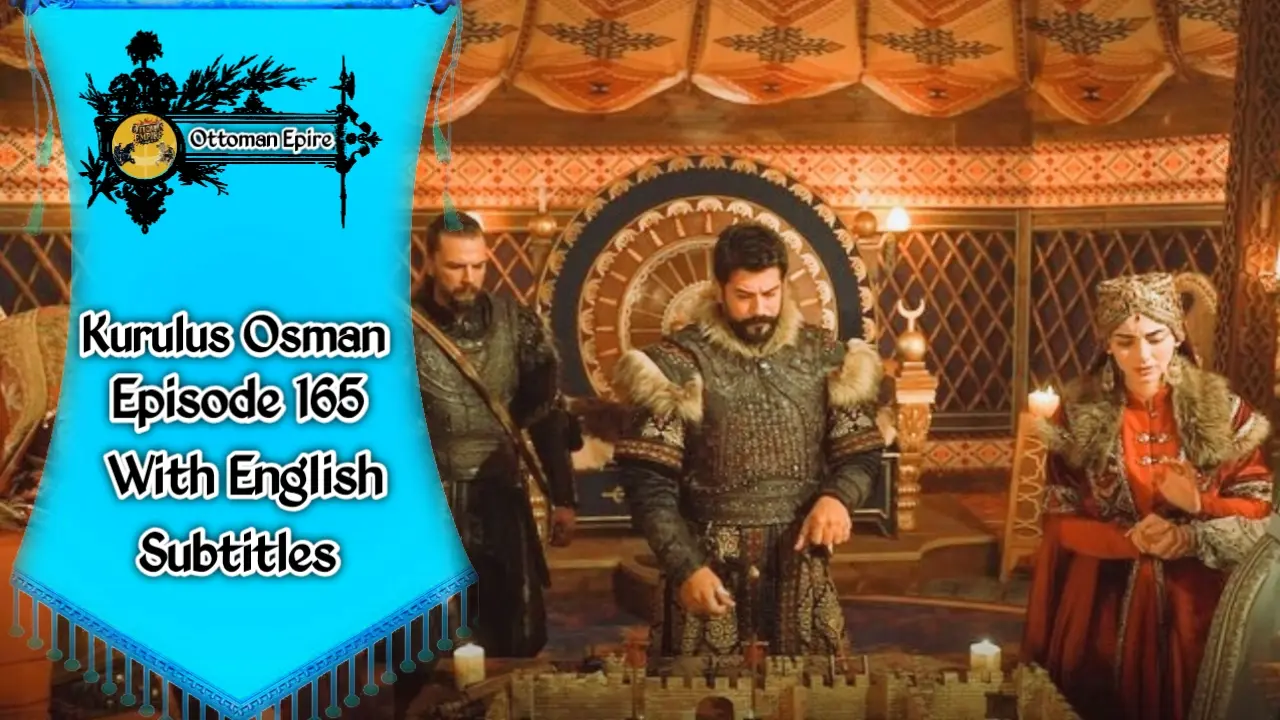
Kurulus Osman Chapter 165 Osman Bey’s Great Struggle Begins
The Fires of Leadership: Osman Bey Seeks Allegiance
In this phase of the narrative, Osman Bey enters a period of significant political transformation. His vision extends beyond territorial expansion and focuses on long-term stability. His primary goal is to unite the Turkish beyliks under a single authority. This effort lays the foundation for a structured and enduring state.
This moment reflects Osman Bey’s transition from a frontier warrior to a strategic leader. He is no longer defined only by military strength. Instead, he demonstrates the ability to shape long-term political order. The developments highlight that leadership in such conditions requires foresight, patience, and calculated decision-making. It also demands the ability to build trust among both rivals and allies.
Bayhan Bey and Begüm Hatun arrive with layered intentions, representing the deep-rooted complexities of tribal politics. Their outward gestures suggest cooperation, yet beneath the surface lies a history shaped by rivalry, pride, and cautious calculation. Osman Bey’s leadership is tested as he navigates these tensions, balancing personal honor with the broader objective of unity. At the same time, discussions surrounding Fatma Hatun as a potential bride demonstrate how political alliances are often reinforced through familial ties, reflecting a key aspect of early Ottoman statecraft where personal relationships and governance were deeply interconnected.
This stage of the narrative reinforces a central principle of state-building:
Power is not sustained by force alone, but by the strength of allegiance, trust, and shared purpose.
Emir Ömer’s Arrival: The Intersection of Faith and Authority
The arrival of Emir Ömer, a representative of the Caliphate, introduces a new dimension to the unfolding political landscape. His presence brings religious authority into a setting already defined by strategic competition and fragile alliances. For Osman Bey, this moment represents a significant challenge, as leadership now requires balancing political ambition with spiritual responsibility.
Emir Ömer symbolizes the connection between faith and governance, emphasizing that legitimacy is not derived solely from military success but also from moral and religious recognition. His mission, though not fully revealed, adds depth to the situation, suggesting that the frontier is no longer just a battleground of tribes, but a space where broader ideological and spiritual forces are at play. This development highlights how leadership during this period required an understanding of both worldly power and spiritual accountability.
The Theft of Sacred Relics: A Crisis of Legitimacy
The revelation that sacred relics have been stolen introduces a powerful layer of tension. These relics are not merely symbolic objects; they represent spiritual authority, continuity, and the moral foundation upon which leadership is built. Their loss creates a crisis that extends beyond material value, affecting the perception of legitimacy itself.
Karesi Bey’s urgency in addressing this issue reflects the importance of maintaining both political stability and spiritual credibility. His proposal for cooperation with Osman Bey illustrates how moments of crisis can reshape alliances, forcing leaders to reconsider their priorities. Osman Bey’s response demonstrates a growing strategic maturity, as he carefully weighs the implications of action, ensuring that every decision aligns with his broader vision of unity.
In this context, the stolen relics serve as a deeper metaphor:
In the formation of empires, the loss of faith can be as dangerous as the loss of power.
Byzantine Strategy: Subtle Power and Psychological Influence
As Turkish influence expands, the Byzantine response takes a more calculated form. Rather than relying solely on direct confrontation, their approach reflects a long-standing tradition of strategic subtlety. Through manipulation, diplomacy, and psychological pressure, they seek to weaken alliances from within rather than challenge them openly.
This dynamic transforms the frontier into a complex environment where every decision carries hidden consequences. Leadership in such conditions requires not only strength but also the ability to recognize unseen threats, interpret intentions, and maintain unity despite external pressure. The unfolding events illustrate how political conflicts are often shaped as much by perception and influence as by direct action.
Holofira and Orhan Bey: Between Identity and Responsibility
The evolving relationship between Holofira and Orhan Bey introduces an important human dimension to the broader political narrative. Holofira’s internal conflict reflects the struggle between loyalty to her origins and the realities of changing alliances. Her position highlights how individuals are often caught between cultural identity and political necessity.
Orhan Bey, on the other hand, represents the next generation of leadership, where personal emotions must be carefully balanced with responsibility. His journey reflects the gradual shaping of a leader who must navigate both personal relationships and strategic decisions. Together, their story adds emotional depth while reinforcing the idea that leadership is not only a matter of authority, but also of understanding and managing human complexity.
Alaeddin Bey: The Emotional Core of Leadership
The situation involving Alaeddin Bey introduces a deeply emotional element, emphasizing the personal sacrifices that accompany leadership. His condition represents more than a political challenge; it symbolizes the vulnerability that exists even within positions of power.
For Osman Bey, this moment becomes a test of character, where he must balance the responsibilities of leadership with the bonds of family. Such situations highlight a recurring reality in history: the path of leadership often demands decisions that carry both strategic importance and personal cost. Alaeddin Bey’s composure under pressure reflects the discipline and resilience expected of those raised within a tradition of responsibility and service.
Themes and Deeper Meaning
The narrative during this phase reflects several interconnected themes that define the process of state formation:
- Unity vs. Division: The struggle to bring together fragmented groups under a shared vision.
- Faith and Legitimacy: The role of spiritual authority in establishing political power.
- Duty vs. Emotion: The balance between personal relationships and leadership responsibilities.
- Strategic Awareness: The importance of understanding both visible and hidden challenges.
Key Takeaways
- Osman Bey’s leadership evolves toward structured state-building.
- Religious authority becomes an integral part of political legitimacy.
- Alliances are shaped by both strategy and personal relationships.
- External pressures require careful and calculated responses.
- Leadership is defined by the ability to balance power, responsibility, and human values.
Frequently Asked Questions
They represent spiritual authority and legitimacy, which are essential for maintaining trust and stability within a leadership structure.
External forces often rely on indirect methods such as influence and division, making awareness and unity critical for stability.
They add complexity, as leaders must balance emotional considerations with broader political responsibilities.
It highlights the personal challenges of leadership and the sacrifices required to maintain long-term stability.
Closing Reflection
A leader does not choose the challenges he faces; rather, those challenges shape the leader he becomes. In moments of uncertainty, true strength lies not only in action, but in wisdom, patience, and the ability to remain steadfast in purpose.